How to Select a CNC Gear Hobbing Machine
Learn how to select a CNC gear hobbing machine by checking gear geometry, workpiece size, module, accuracy, hob compatibility and production requirements.
How to Select a CNC Gear Hobbing Machine
A practical guide to turning a gear part or drawing into a machine specification
The right gear hobbing machine is selected from the gear geometry, required accuracy and production plan - not from the machine’s maximum module alone. A useful review starts with the drawing, confirms the workpiece envelope and cutting process, then checks whether the machine, hob, fixture and inspection plan can meet the requirement together.
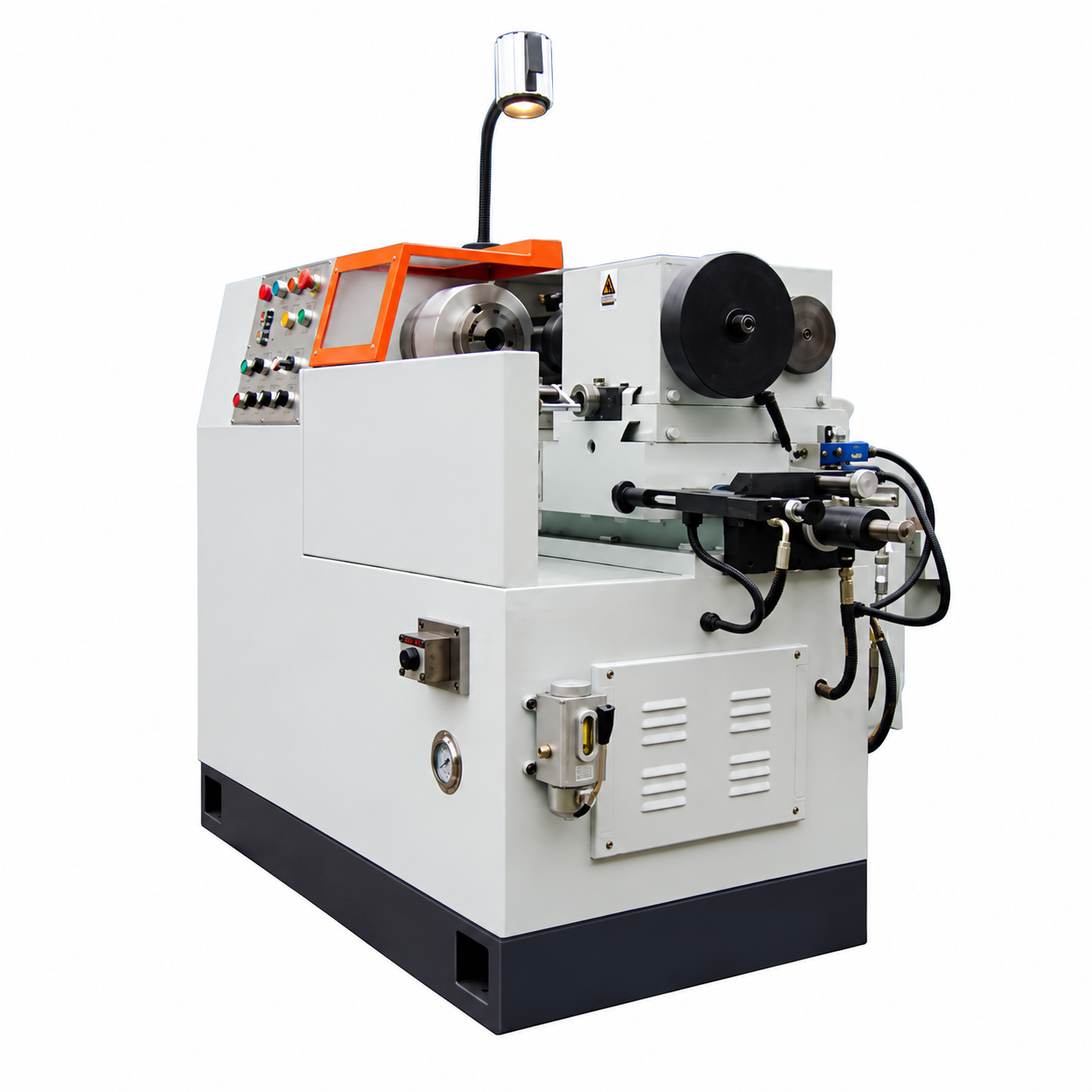
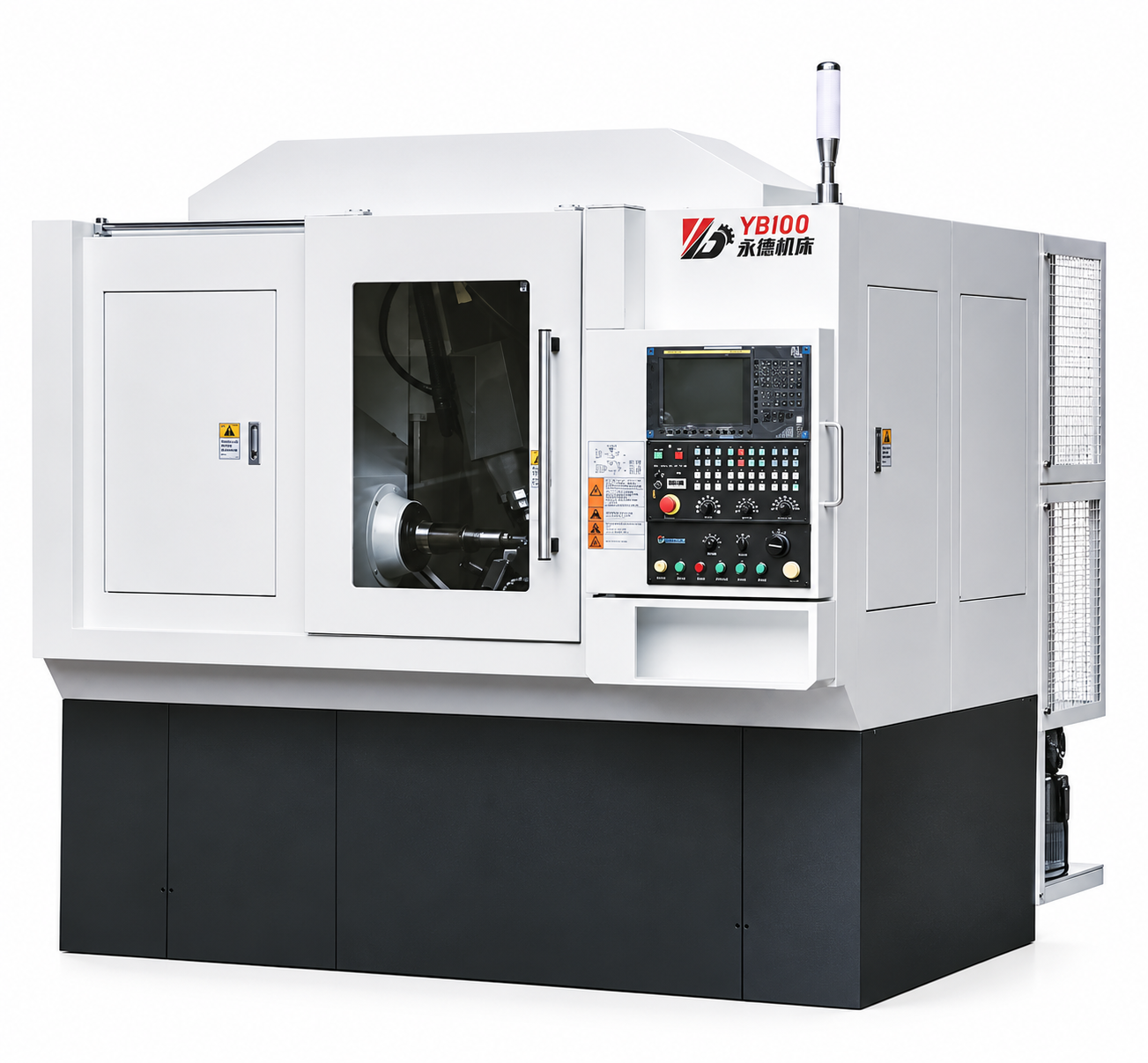
Ningbo Yongbo YB100 Series horizontal CNC gear hobbing machine. Machine image from the product materials supplied for this article.
1. Read the drawing before comparing models
Before requesting a quotation, collect the following information from the part drawing or 3D model. If any item is missing, mark it as “to be confirmed” instead of guessing.
· Gear type. External spur or helical gear, spline, worm wheel, internal gear or another form. Standard hobbing is commonly used for external cylindrical spur and helical gears; other forms may require a different process or a special machine configuration.
· Tooth geometry. Module, tooth count, pressure angle, helix angle and hand, face width, outside diameter, root diameter and any profile modifications. These values determine the work envelope, hob and machine-axis range.
· Material and condition. Material grade, hardness, heat-treatment route and whether teeth are cut before or after heat treatment. Hardened-tooth finishing is a process-specific application and must be validated with the hob, machine and inspection method.
· Accuracy and finish. State the required gear quality grade, applicable standard, inspection method and whether the requirement applies before or after heat treatment. A machine’s stated accuracy is not a guarantee of finished-part accuracy.
· Production conditions. Annual quantity, batch size, target cycle time, loading method, available floor space and the expected level of automation.
2. Check the six selection factors
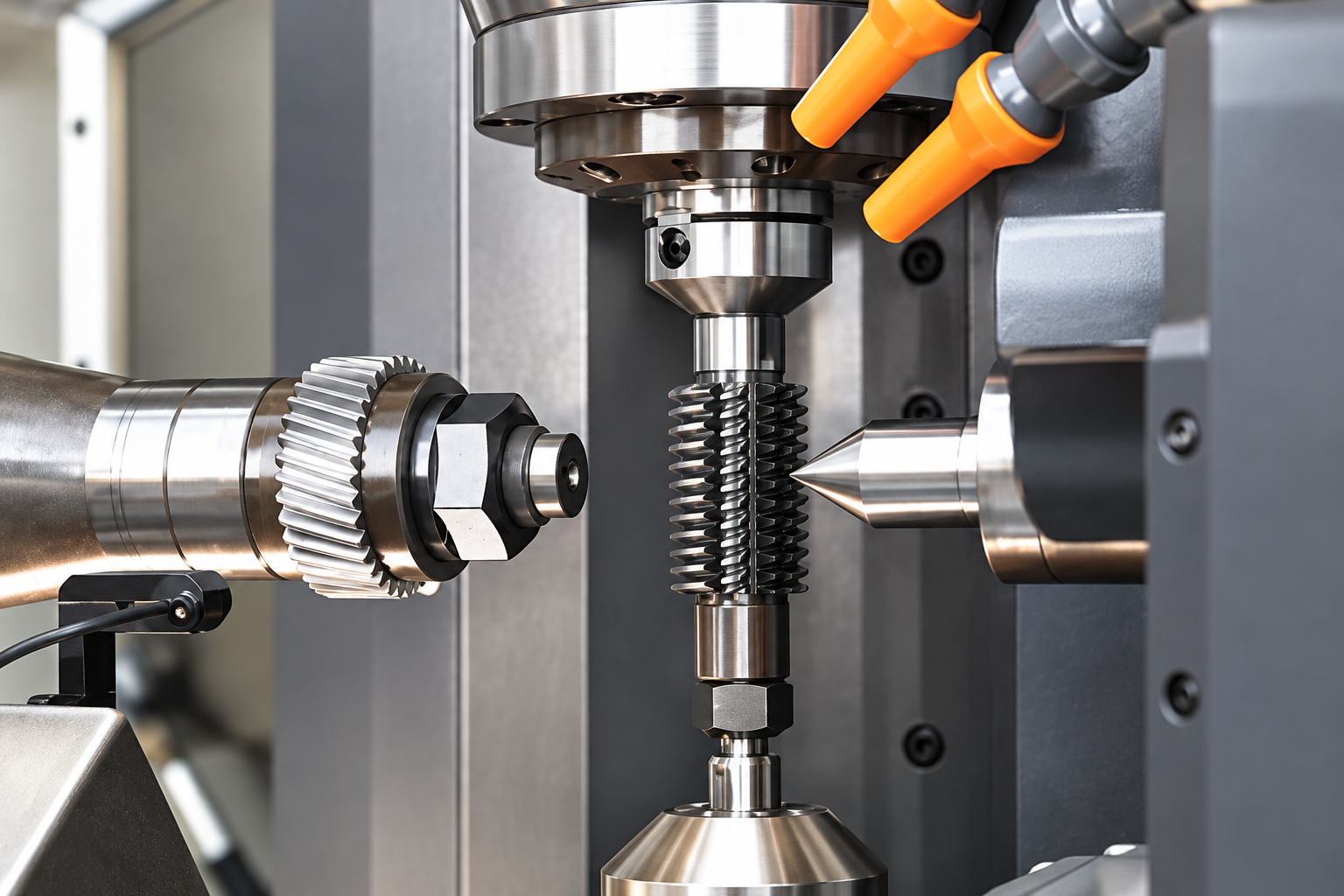
1. Workpiece envelope. Compare the gear outside diameter and overall length with the machine’s rated workpiece diameter, travel and fixture space. Leave room for the arbor, hob, clamping hardware and safe tool approach. A part that barely fits on paper can still be impossible to load or cut efficiently.
2. Module and tooth geometry. Confirm the machine supports the gear module and tooth form. For helical gears, check the helix angle, hand, hob-head swivel range and required axis coordination. Also verify tooth-count limits and whether the machine supports the required corrections or special profiles.
3. Hob and arbor compatibility. Check hob diameter, length, bore/arbor size, axial stroke and available hob shifting. Confirm the hob material and coating suit the workpiece material, hardness and cutting conditions. Tooling is part of the machine selection, not an afterthought.
4. Spindle speed, torque and power. Review work-spindle speed and torque as well as hob-spindle speed and power. Smaller modules and high-volume parts may favor higher speed; larger modules, wider gears or tougher materials may call for more cutting capacity. Compare the actual cutting range, not only peak rpm or kW.
5. Accuracy and process capability. Ask for the conditions behind any stated gear grade: module range, workpiece material, hob accuracy, fixture, cutting parameters, thermal state and measurement method. Specify the inspection report and acceptance criteria in the quotation.
6. Loading, chip control and automation. Review clamping repeatability, part access, chip evacuation, coolant or dry-cutting requirements, deburring and loading/unloading. For repeat production, estimate total cycle time including load, clamp, cut, deburr and unload.
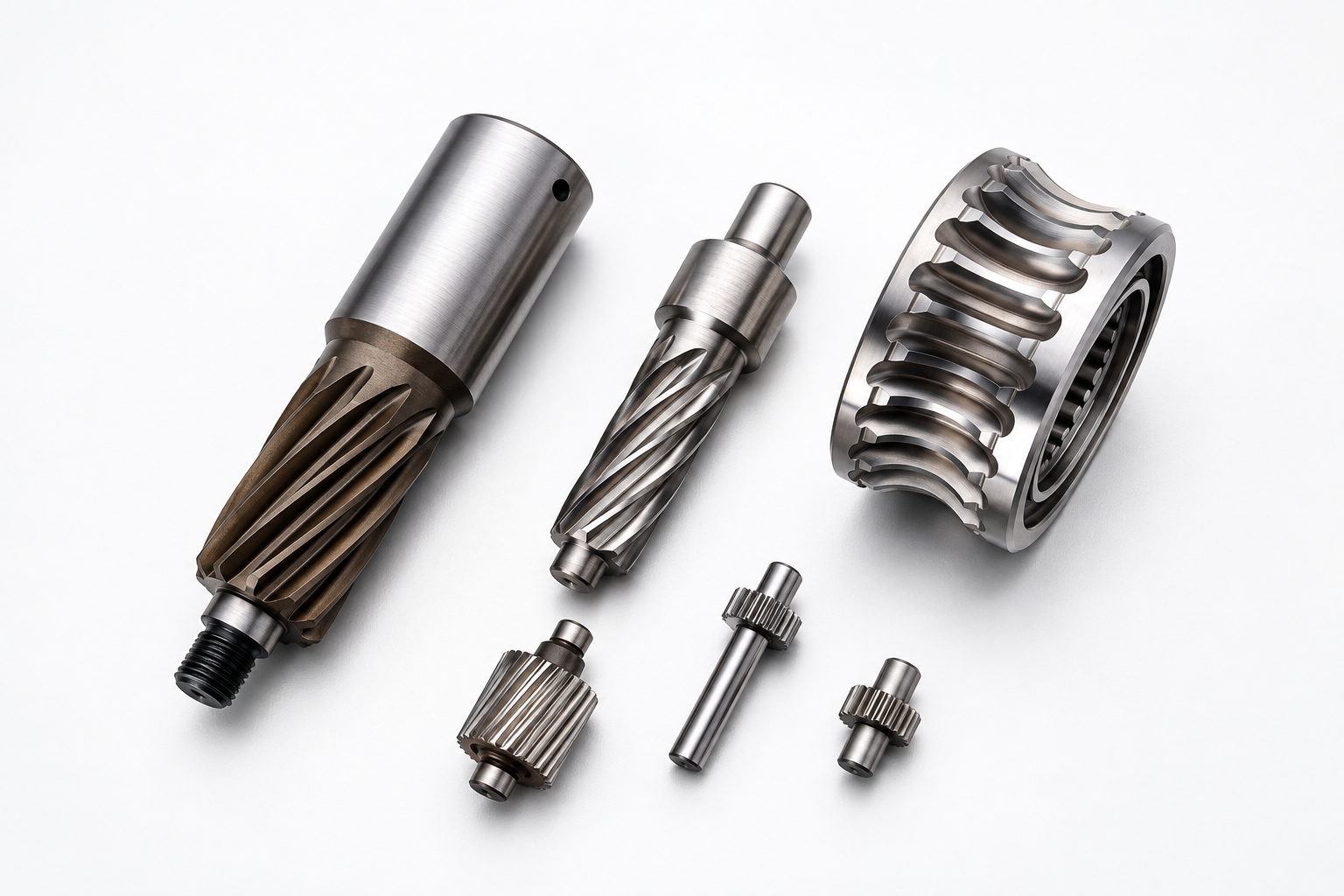
A quick screening example
Assume a drawing shows an external spur gear with an 80 mm outside diameter, module 2 mm and a 25 mm face width. YB80 and the YB100 series pass the initial diameter and module screen because their listed limits are Ø100 mm and module 3 mm. That is only a first filter: check the hob/arbor, tooth count, fixture access, material and required cycle time.
If the drawing also requires Grade 6, the stated YB80 and YB100 accuracy qualification for module m ≤ 1.5 mm does not cover this module-2 example. The YB200 sheet states Grade 6 for m ≤ 3 mm under its stated conditions, but that alone does not prove it is the right machine. Ask for a process review and trial-cut inspection against the drawing before committing.
3. Use model capacity as a filter, then validate the application
The Ningbo Yongbo product materials supplied for this article describe three useful reference points. The figures below are machine-envelope limits, not a promise that every gear within the envelope will meet a particular quality grade.
Reference model | Layout | Rated workpiece envelope | When to evaluate it |
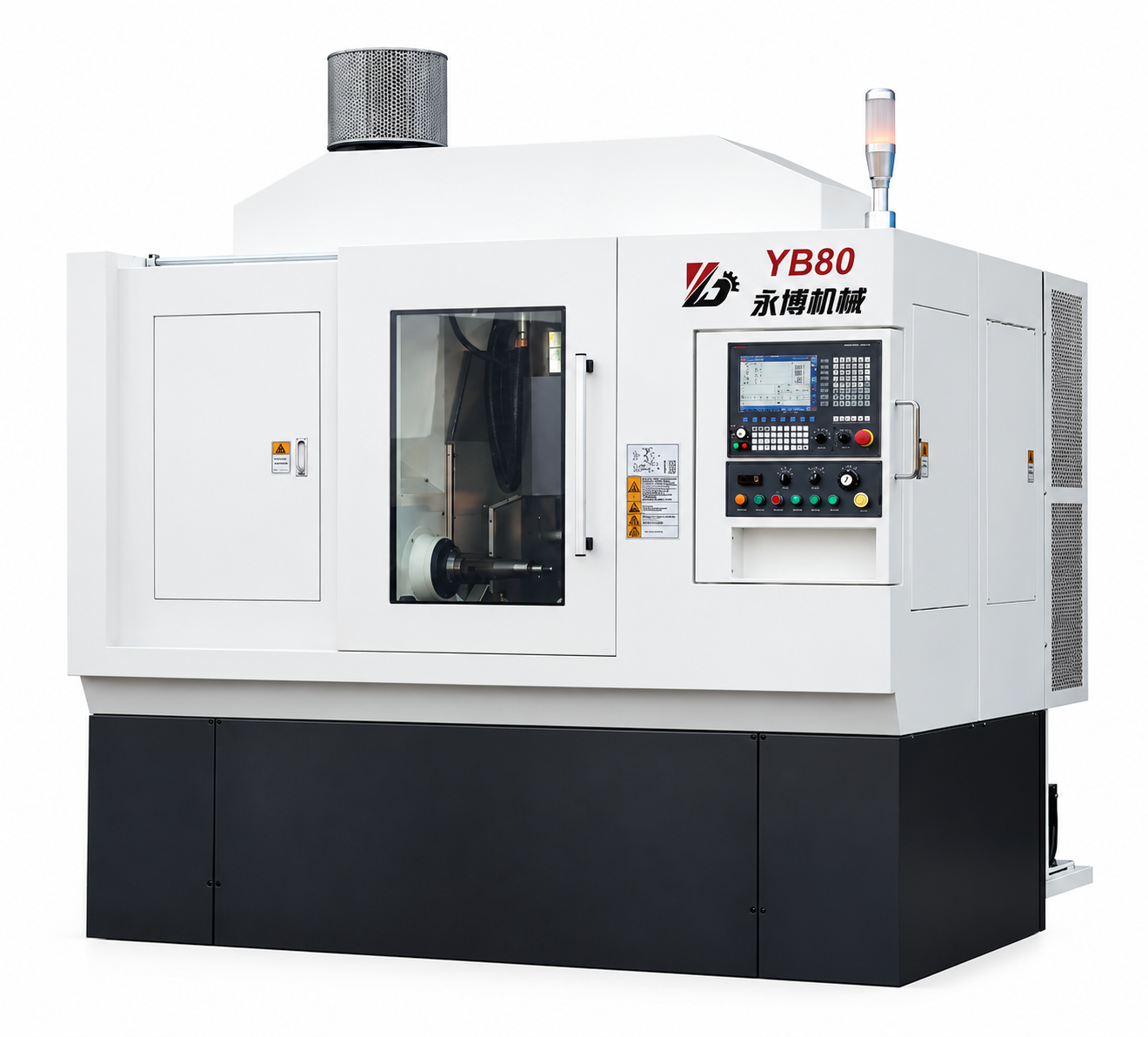
YB80 | Horizontal | Max. diameter Ø100 mm; max. module 3 mm; max. workpiece length 220 mm | Compact external spur/helical gears where the stated hob and workpiece limits are sufficient. |
YB100 / YB100II / YB100III | Horizontal | Max. diameter Ø100 mm; max. module 3 mm; max. slide travel 220 mm | Small and medium cylindrical gears; compare spindle drive, CNC system, speed/torque and automation needs across the three configurations. |
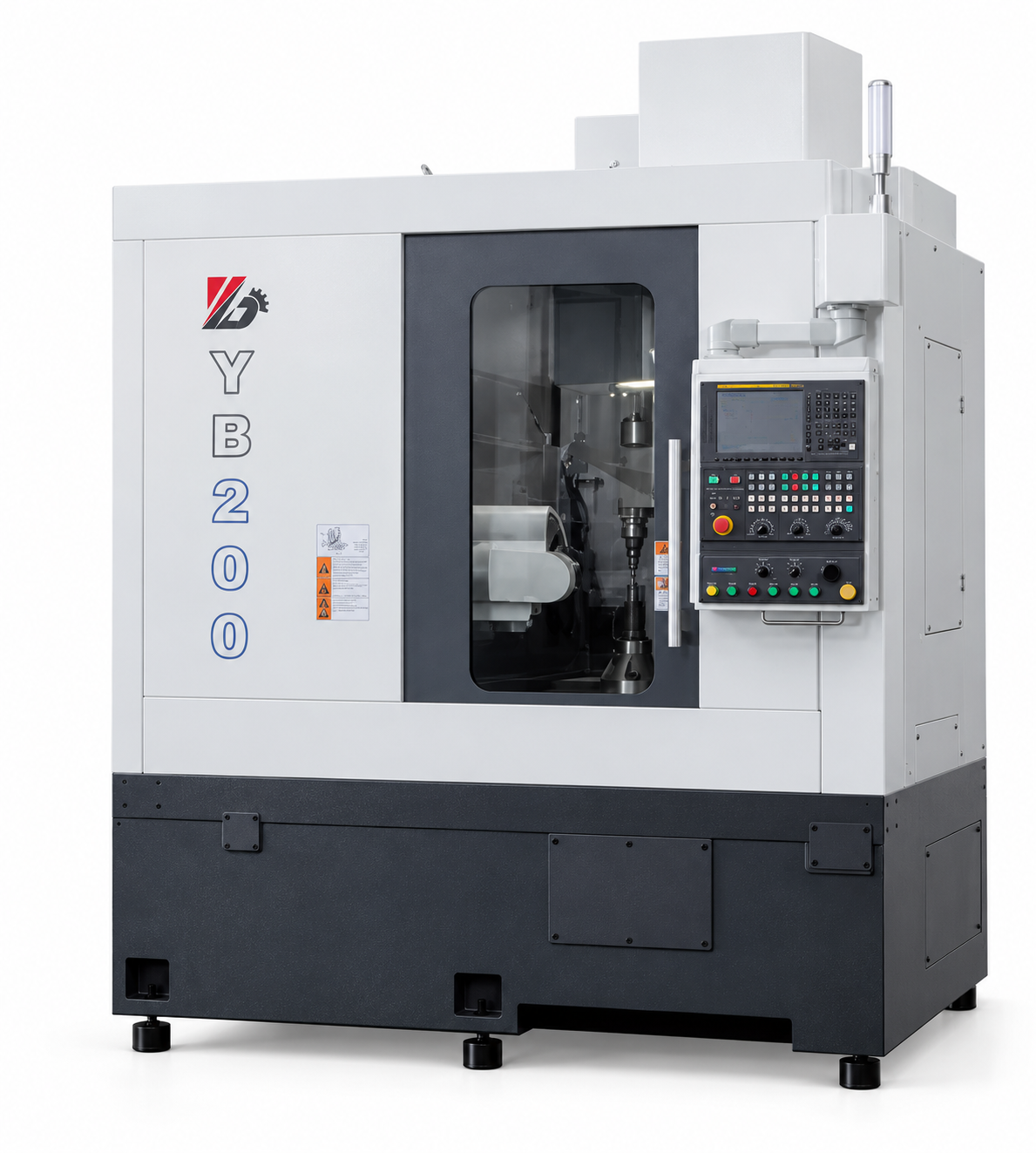
YB200 | Vertical | Max. diameter Ø200 mm; max. module 6 mm; max. hobbing length 230 mm | Larger workpiece envelope or applications where vertical loading and the specified tooling arrangement suit the part and production cell. |
YB80 horizontal | Ø100 mm max. diameter, 3 mm max. module | YB200 vertical | Ø200 mm max. diameter, 6 mm max. module |
4. Compare the variants that share a model family
The YB100 family illustrates why a model name alone is not enough. The supplied specifications list a FANUC torque-motor work spindle and oil-cooling unit on YB100, while YB100II and YB100III use precision gear-driven work spindles. YB100 and YB100II use FANUC CNC; YB100III uses Syntec. Work-spindle speed, torque and hob-spindle ratings also differ. Select the variant against the required cutting conditions, control preference, service support and budget.
5. Treat accuracy claims carefully
The supplied YB80 and YB100 materials state Grade 6 gear accuracy for spur and helical gears with module m ≤ 1.5 mm under the stated conditions. The YB200 material states Grade 6 for module m ≤ 3 mm under its stated conditions, even though its maximum module is listed as 6 mm. These limits should not be merged: maximum module describes a cutting envelope, while the accuracy statement applies only to its qualified range.
Finished gear quality also depends on the hob, workpiece material and hardness, blank runout, clamping, machine setup, cutting parameters, thermal stability and measurement. Ask the supplier to confirm the qualification in writing and, for a critical part, agree on a trial cut and inspection report before production approval.
6. Send a complete selection brief
When you send a gear drawing to a machine supplier, include a short brief with:
· Gear type and drawing revision; identify external/internal teeth and spur/helical form.
· Module, tooth count, pressure angle, helix angle and hand, face width, diameters and total length.
· Material grade, hardness, heat-treatment sequence and the condition at the hobbing operation.
· Required gear quality grade, inspection standard, measurement method and acceptance report.
· Blank dimensions, datum surfaces, clamping concept and any shaft, bore or shoulder constraints.
· Annual volume, batch size, target cycle time, staffing, loading method and available floor space.
· Required accessories: hob, arbor, fixture, deburring, coolant/dry-cutting setup and automation.
Engineering takeaway. Choose the smallest machine that safely covers the full gear envelope and process, with enough capacity for the required hob, fixture and production plan. Then validate the exact part against a written process and accuracy commitment. If the drawing is incomplete, resolve the missing geometry and inspection requirements before comparing quotations.
Reference note. Model capacities and configuration details in this article are transcribed from the Ningbo Yongbo YB80, YB100 series and YB200 product materials supplied for preparation. Confirm the current machine configuration, accessories and application capability with the supplier before ordering.
Send us your drawing or sample — our engineers review material, tolerances and cycle time, and reply with a machine & process recommendation.
Discuss Your Part →