Which CNC Control Is Best for a Swiss-Type Lathe?
A practical guide to choosing a Swiss-type lathe control by reviewing channel configuration, spindle synchronization, programming workflow, operator skills and service support.
Which CNC Control Is Best for a Swiss-Type Lathe?
A practical guide to channels, synchronization, programming workflow and service support
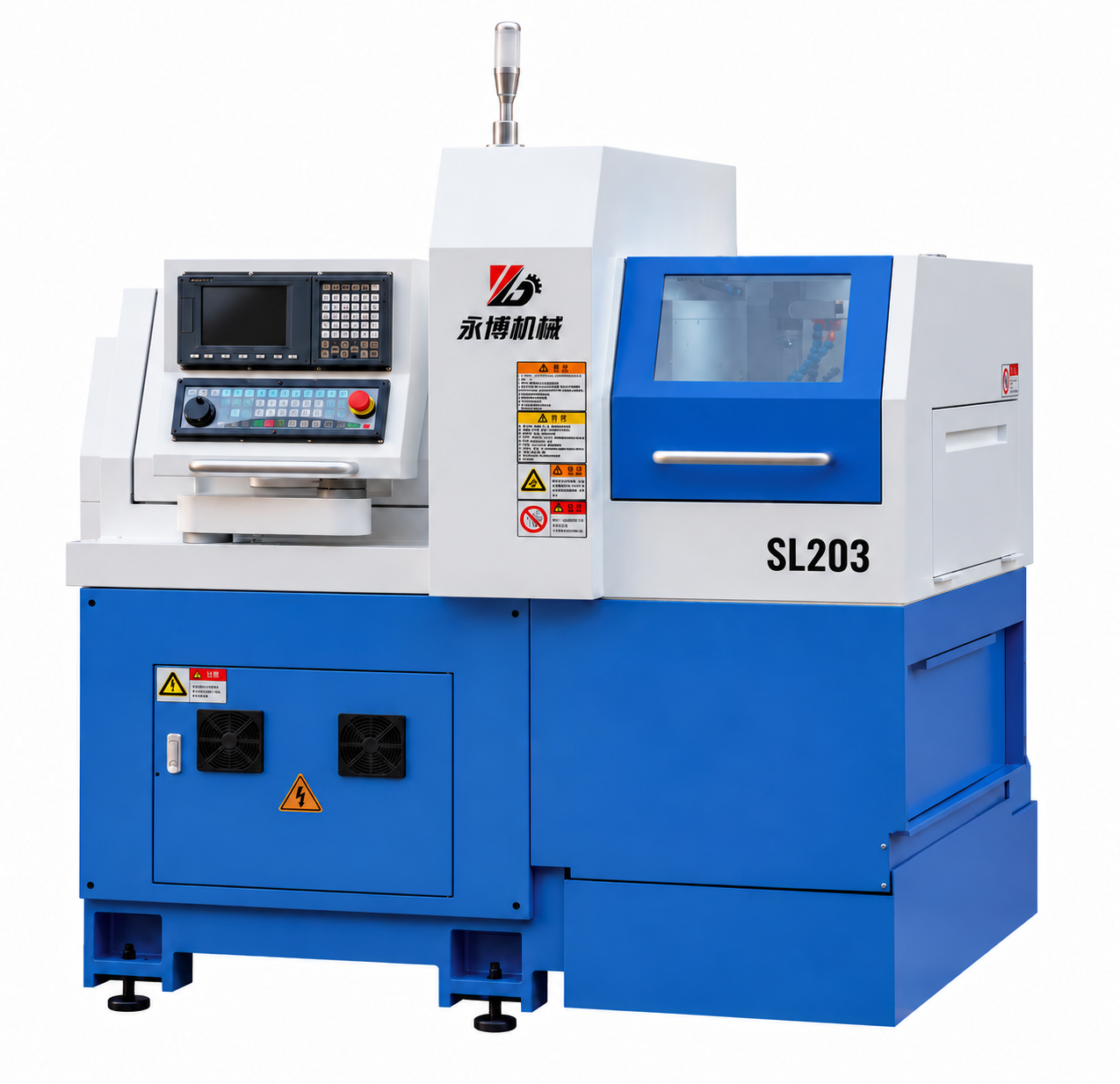
SIPENG SL203 Swiss-type CNC lathe. Machine configuration and available control options vary by model.
Short answer Choose the control your team can program, prove out and support reliably. For a Swiss-type lathe, the control brand matters less than the correct channel and axis configuration, proven spindle/tool synchronization, a dependable postprocessor and local service capability. |
A control is the operating layer between the part program and the machine’s coordinated motions. On a Swiss-type lathe, it must manage guide-bushing or non-guide-bushing turning, live tooling, bar feed, and—when fitted—main/sub-spindle handoff. The right choice is therefore a shop-floor decision, not a brand contest.
The question to ask “Which control configuration lets us make this part safely, repeatably and at the lowest cost per good component—with our people, programs and service network?” |
Start with the part and the process
Before comparing control names, define what the machine must do. A control cannot compensate for a process plan that has not allocated tools, spindle work and handoff operations clearly.
1 Map the complete machining route
· List every operation from bar stock to finished part: turning, drilling, milling, cross holes, cutoff, back working and part ejection.
· Mark which operations can run at the same time and which must wait for another axis, tool or spindle.
· Confirm bar diameter, guide-bushing use, workpiece length, material, tolerance, surface-finish target and expected lot size.
· For twin-spindle work, define the transfer point, grip length, cutoff sequence and which spindle finishes each feature.
2 Check the control configuration
“Two-channel” does not automatically mean every operation is simultaneous. Ask the supplier to identify the actual controlled axes, channel assignment, spindle synchronization method and any limits on concurrent motion. Review this against the intended tool layout and cycle sequence.
3 Prove the program on your part
· Have the supplier review one representative drawing and explain the proposed tool sequence and handoff.
· Run a machine demonstration or simulation that shows channel coordination, spindle phase/position control and collision checks where applicable.
· Confirm the postprocessor produces code for the exact machine model, control version, axis layout and options being quoted.
· Measure the first-off parts and record cycle time, tool life, scrap/rework and operator intervention—not cycle time alone.
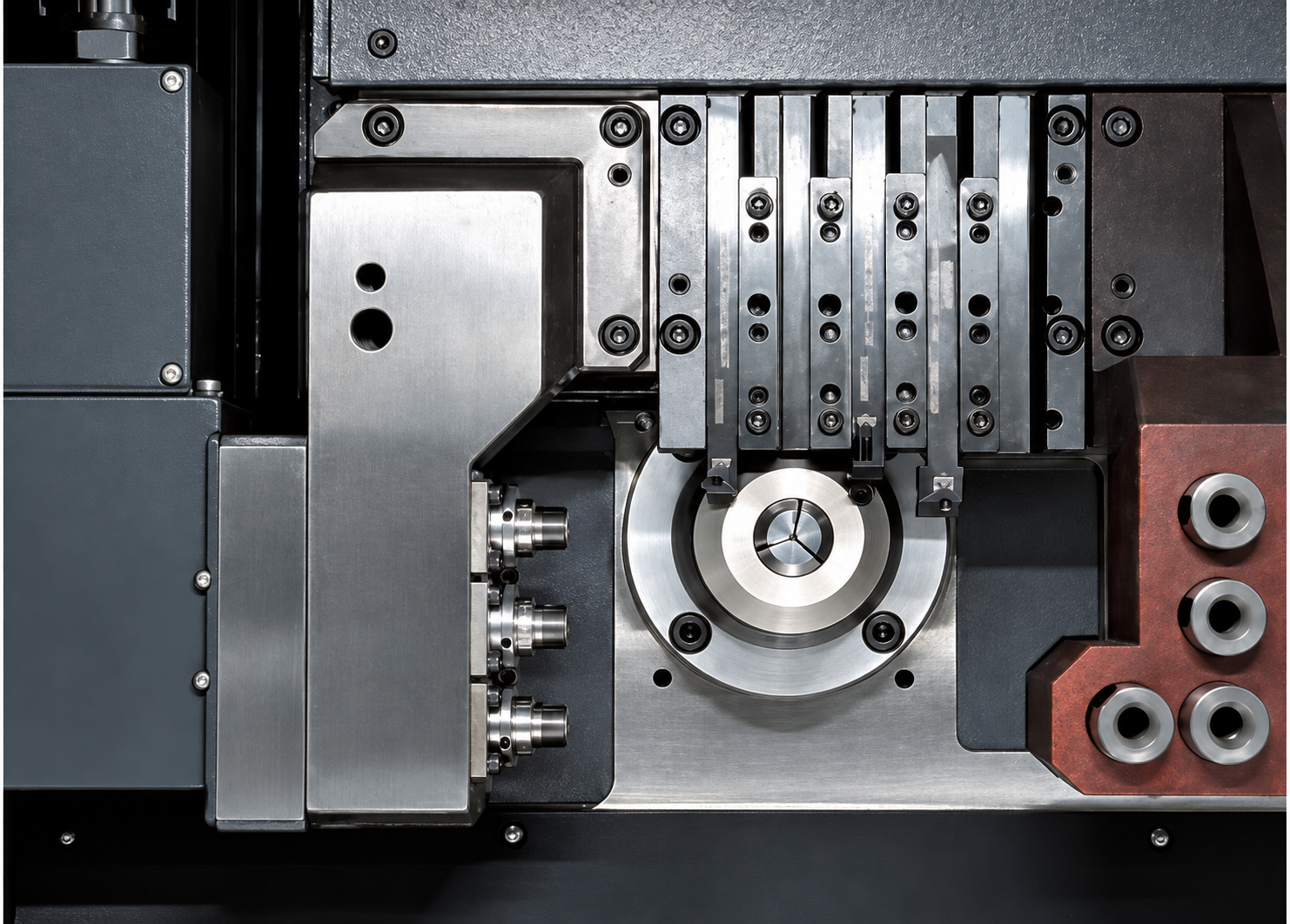
Tooling and spindle access inside the SL203 work zone. The layout determines what the control must coordinate.
Compare systems by shop-floor fit
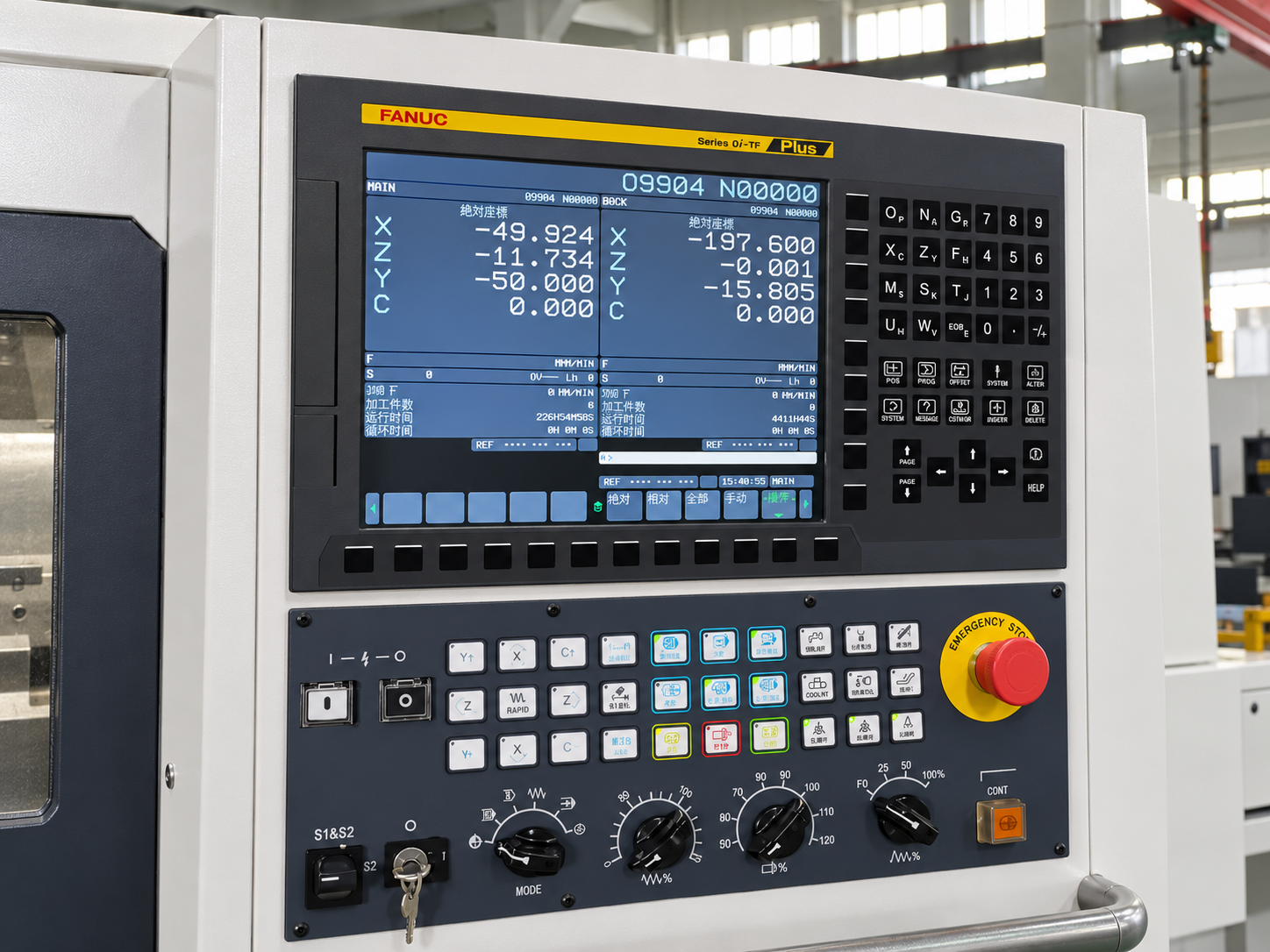
Syntec, FANUC and Mitsubishi can all be suitable when specified for the job and supported by the people who will run it. The useful comparison is how each proposed configuration fits the plant’s existing skills, programming standards and maintenance coverage.
Decision factor | What to verify before purchase |
Operator familiarity | Can operators set offsets, recover from alarms and change tools safely without relying on one specialist? |
Programming and postprocessor | Does the CAM post match the exact control, machine kinematics, channel layout and optional functions? Who maintains it? |
Channels and synchronization | Are main/sub-spindle handoff, live tools and concurrent operations supported as intended? Request a part-specific proof. |
Factory standardization | Does the plant already stock manuals, backups, spare parts and trained service technicians for this control family? |
Diagnostics and service | Who provides remote support, commissioning, training and local on-site response? In what language and time zone? |
Economics | Compare installed price and training with cycle time, unattended hours, tool life, first-pass yield and service cost per good part. |
How to think about the main options
Syntec is a practical standard when the offered machine configuration meets the process and the builder can provide sound commissioning, postprocessor support and operator training. FANUC or Mitsubishi can be a strong fit when the factory already standardizes on that platform or has established local programming and service capability. The best option is the one that reduces total production risk for this part family.
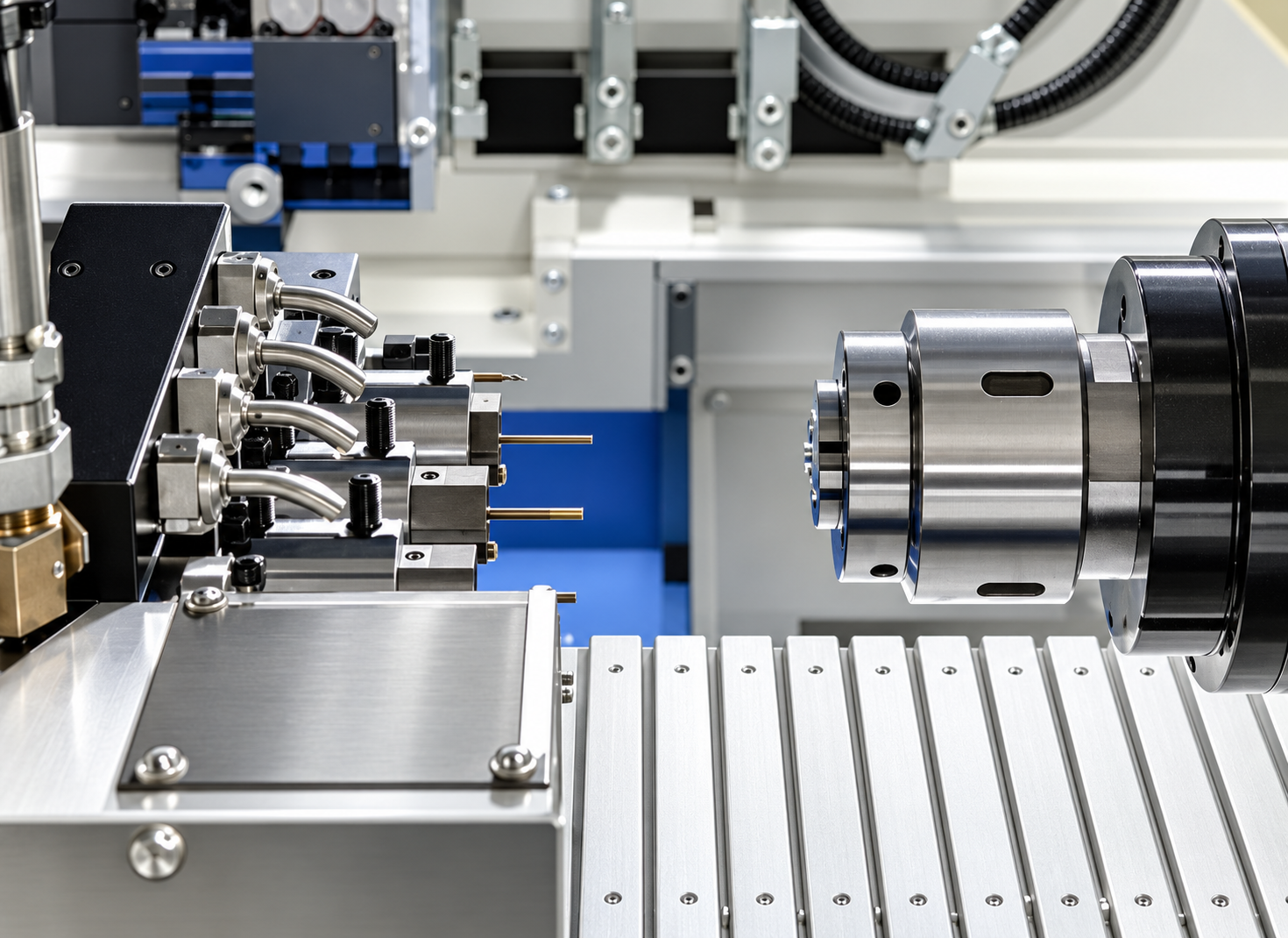
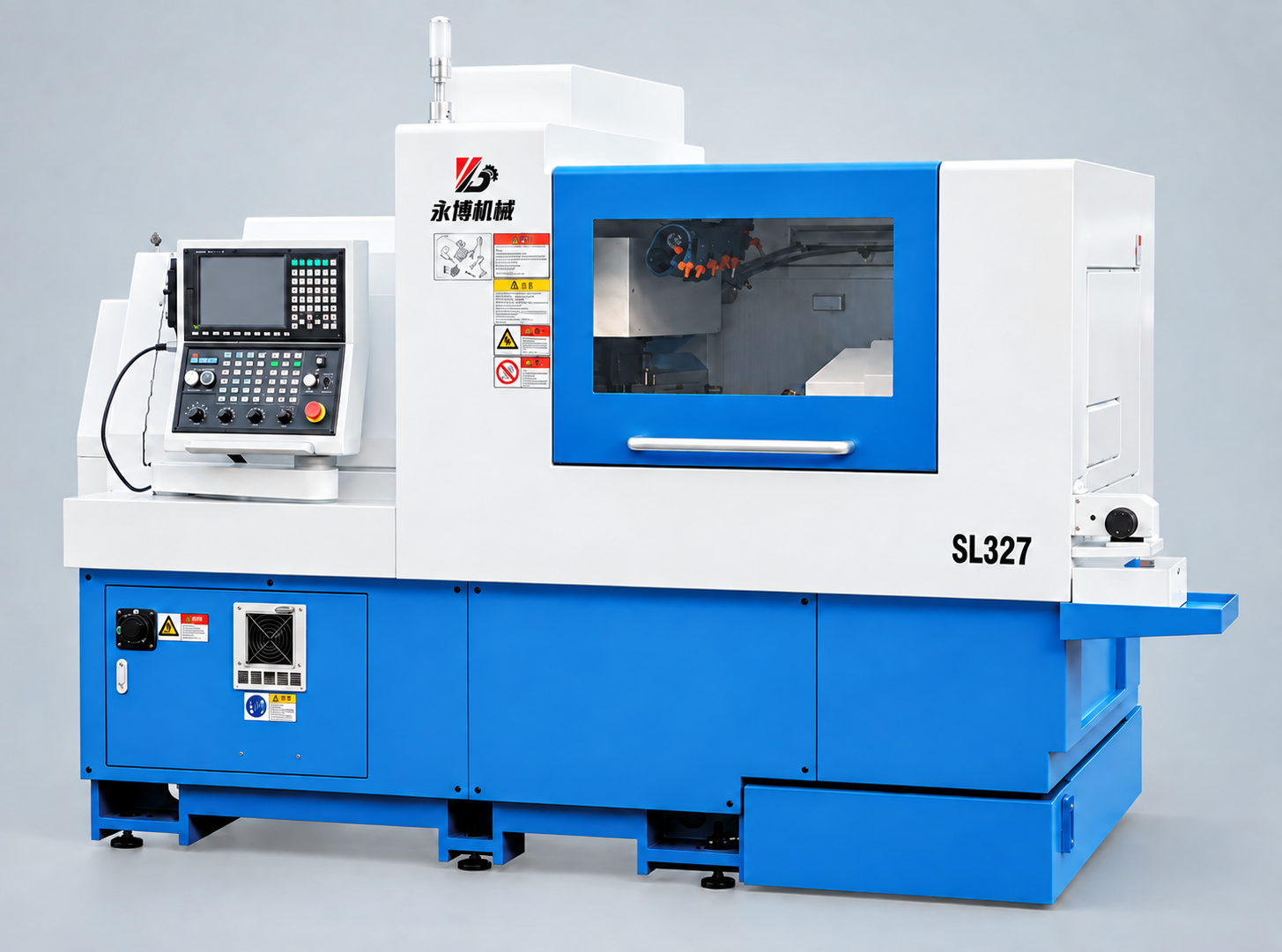
SIPENG SL265 twin-spindle Swiss-type lathe. Confirm the exact spindle, channel and control configuration on the quotation.
SIPENG configuration note: The brochures identify Taiwan Syntec as standard on the listed models and FANUC or Mitsubishi as options on specified configurations. Confirm the exact model, control, axes/channels and spindle functions in the written quotation.
A buyer’s acceptance checklist
Before order | At commissioning | Before production release |
Freeze model, bar capacity, guide-bushing mode, spindle count and control option in writing. | Verify axis/channel assignment, spindle synchronization, interlocks and safe recovery procedures. | Run a representative part from the approved postprocessor and document the program revision. |
Confirm CAM post ownership, update path, backup format and training scope. | Train operators and setters on offsets, tool changes, alarms, backups and restart after interruption. | Measure critical dimensions and surface finish; log cycle time, tool life and operator interventions. |
Agree on installation, local service response, spare parts and remote diagnostics. | Check bar-feeder interface, peripheral I/O, chip/coolant handling and part catcher operation. | Approve a stable process window and standard work for setup, inspection and tool replacement. |
A practical recommendation
For a first Swiss-type cell or a shop without a strong preference, begin with the builder’s standard control configuration and ask for a part-specific proof run. Move to FANUC or Mitsubishi when standardization, trained staff, existing programs or regional service access creates a clear operational advantage. In every case, buy the verified machine-and-control package—not a control name in isolation.
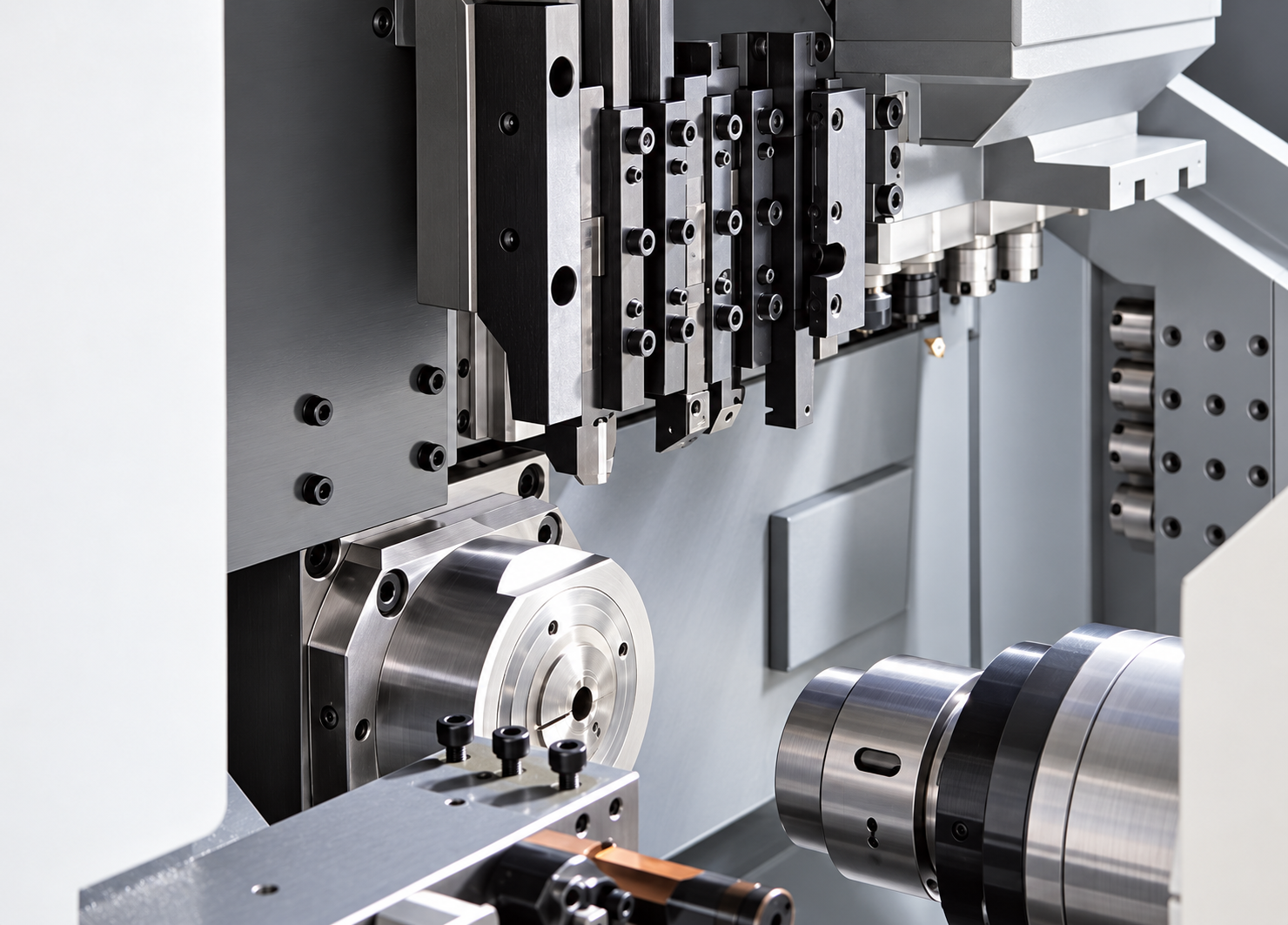
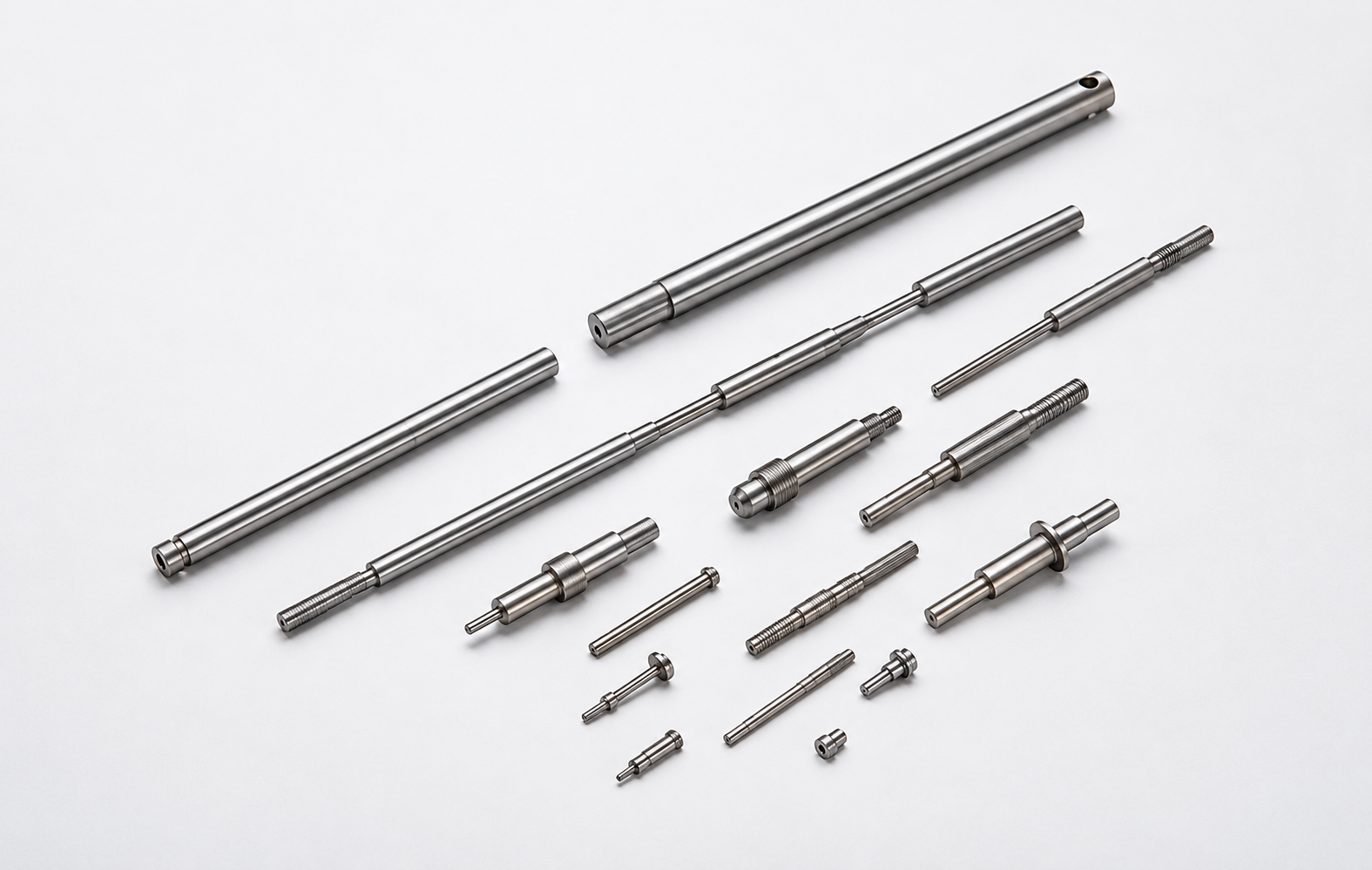
Representative precision-turned components made on Swiss-type equipment.
Questions to put to the machine builder
· Which exact control, software version, axes and channels are included in this quotation?
· Can you demonstrate the complete cycle for one of our drawings, including spindle handoff and back working?
· Who supports the postprocessor, commissioning, operator training and service after acceptance?
Reference basis: SIPENG SL203 and SL205/SL265 product brochures. Model-specific specifications and options must be confirmed in the final quotation.
Send us your drawing or sample — our engineers review material, tolerances and cycle time, and reply with a machine & process recommendation.
Discuss Your Part →