Which Parts Are Best Suited to a Swiss-Type Lathe—and Which to a CNC Lathe?
A practical guide to choosing between a Swiss-type lathe and a conventional CNC lathe based on part geometry, slenderness, stock form, production volume and process requirements.
Which Parts Are Best Suited to a Swiss-Type Lathe—and Which to a CNC Lathe?
A practical guide to part geometry, slenderness, production volume and process integration
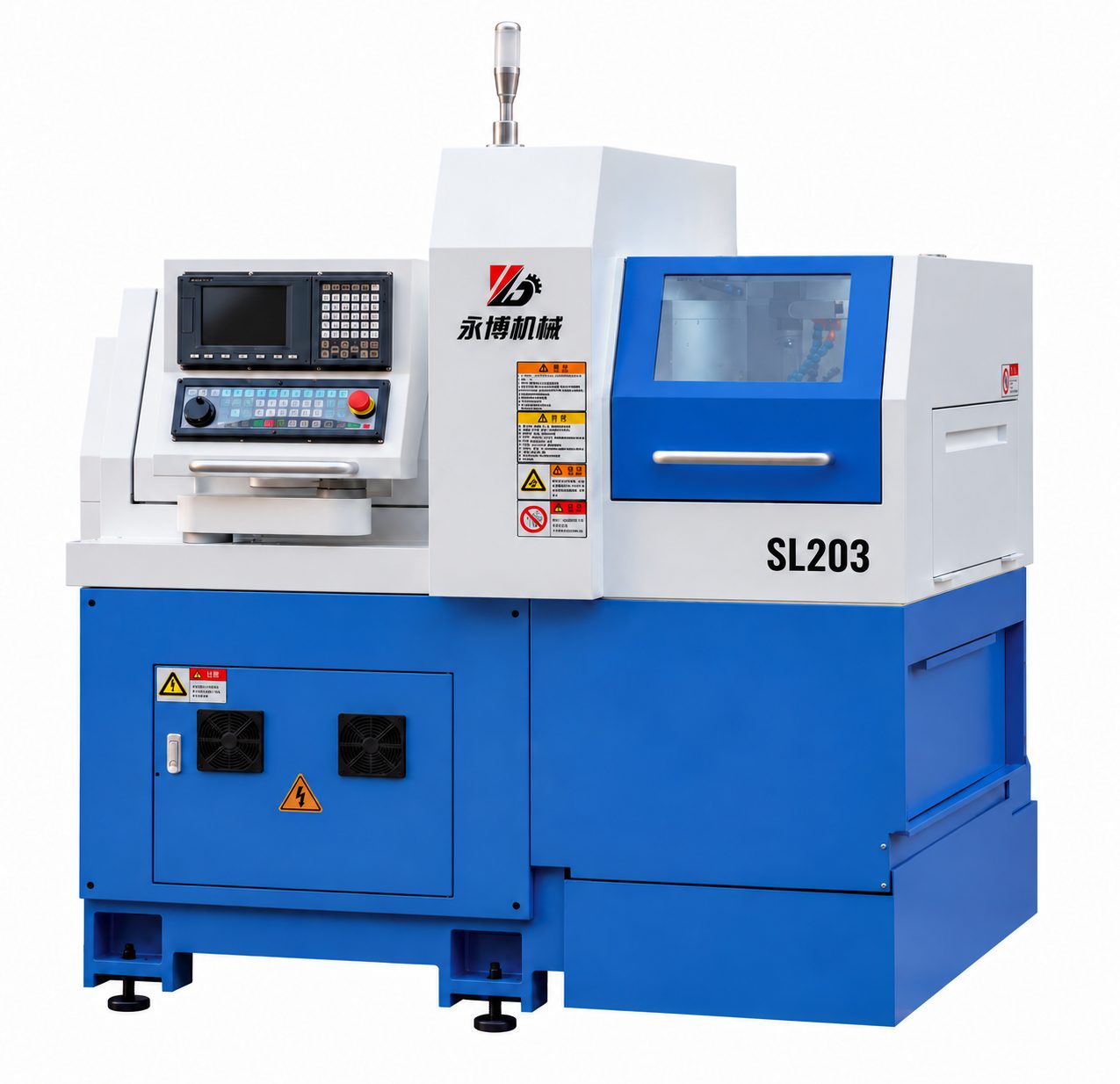
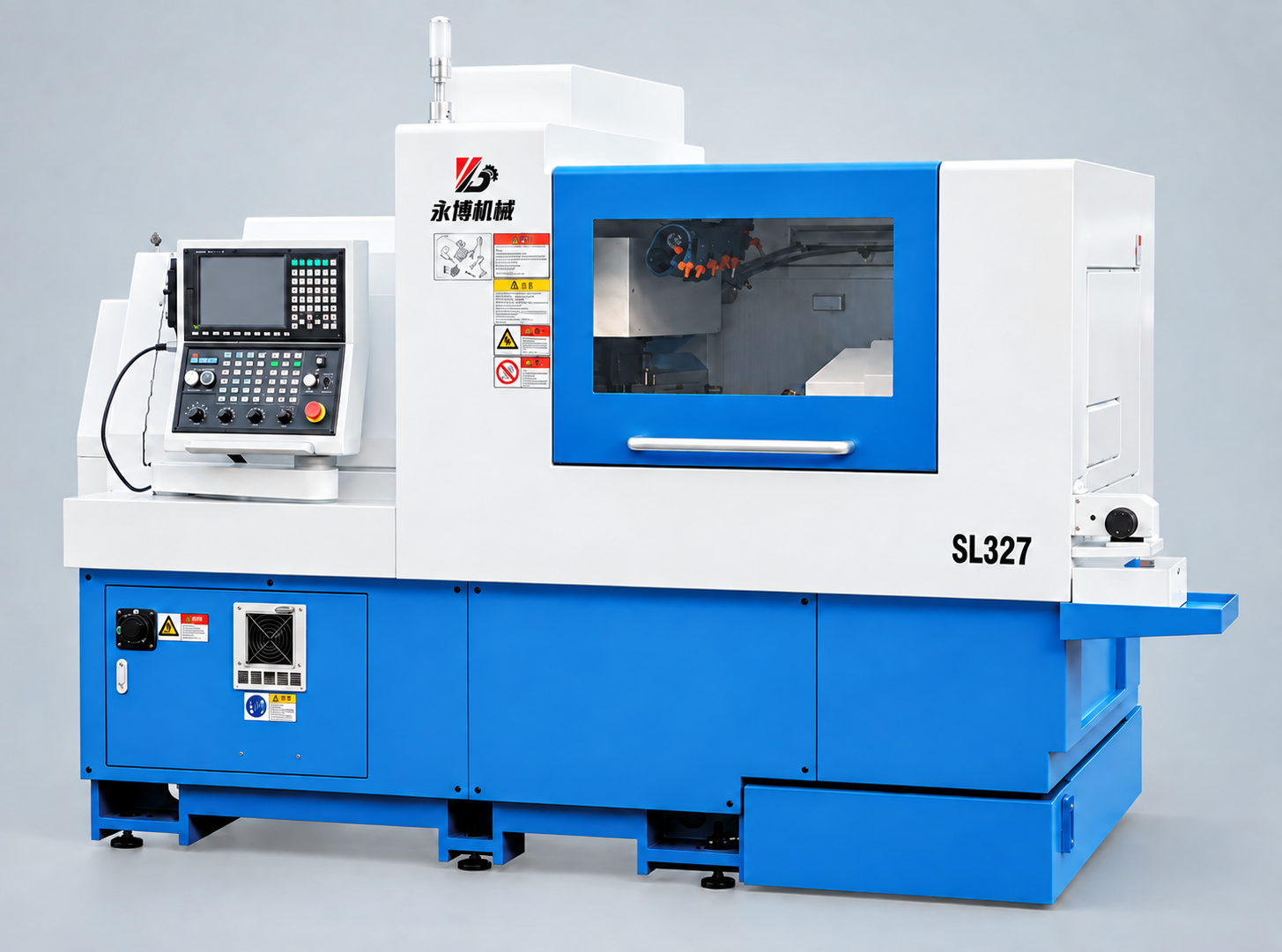
SIPENG SL203 Swiss-type CNC lathe
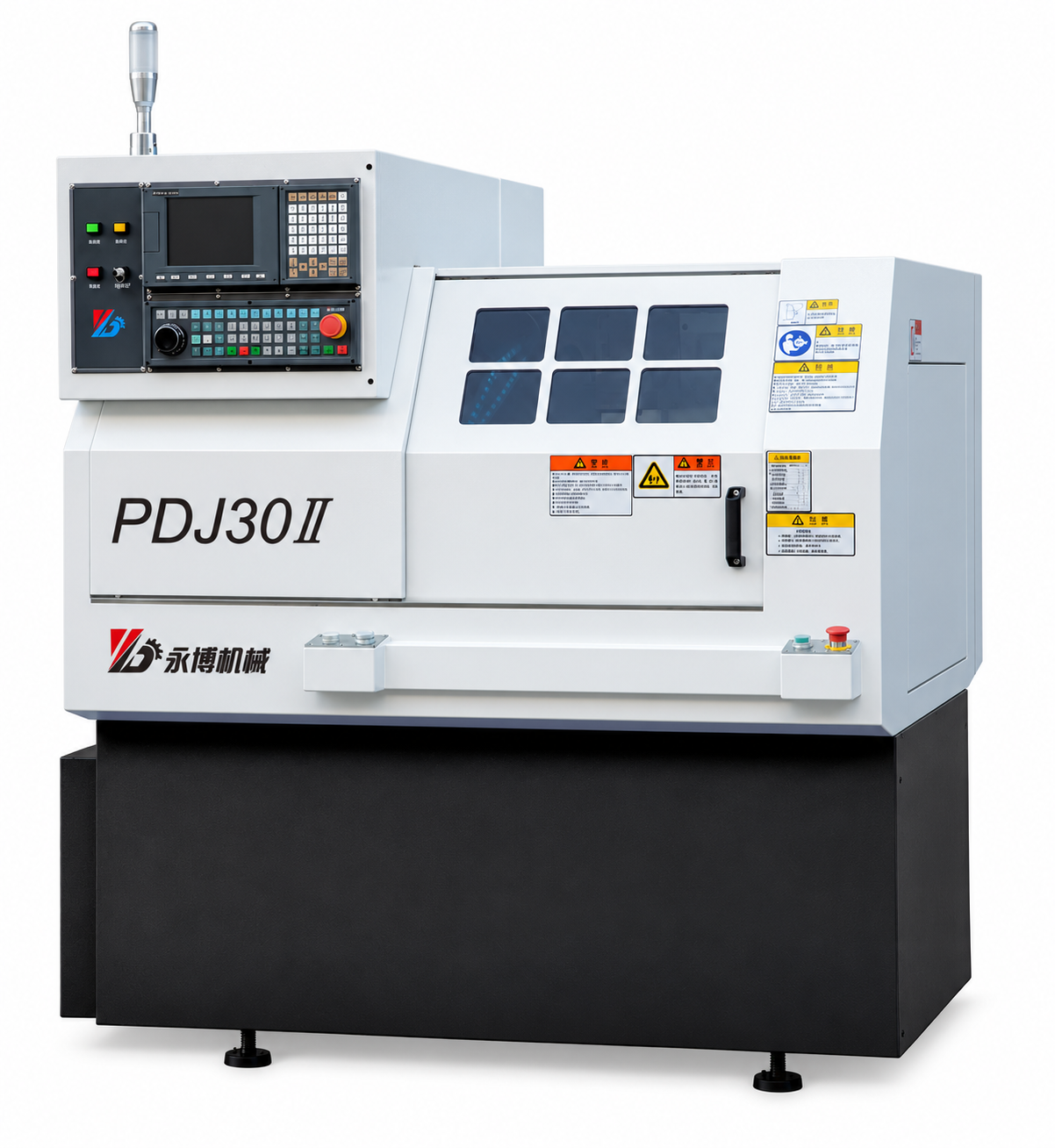
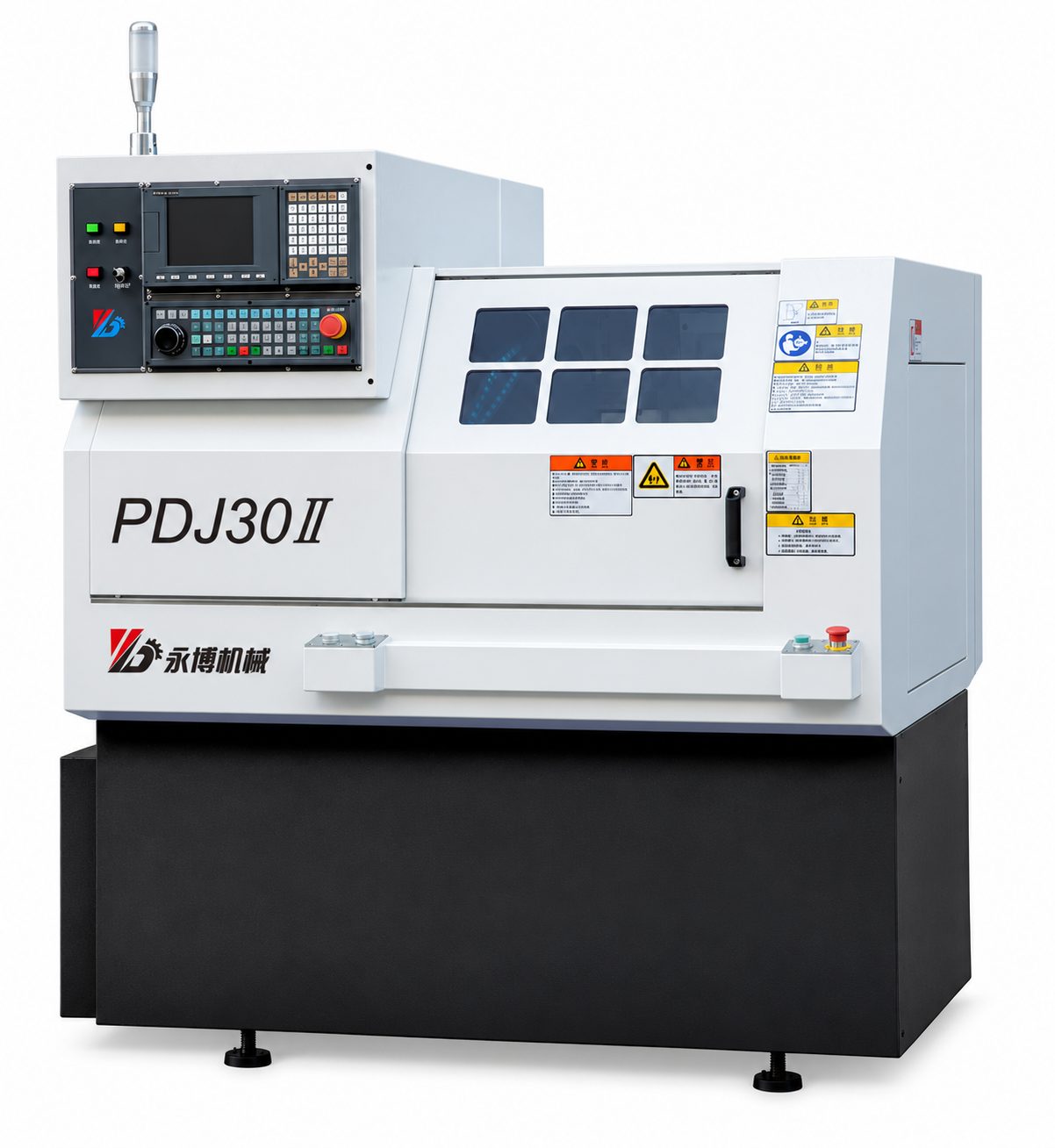
SIPENG PDJ30II CNC turning center Short answer Choose a Swiss-type lathe when the process benefits from supporting slender bar close to the cutting zone and completing many small-diameter features efficiently from bar stock. Choose a conventional CNC lathe when the part is shorter or stiffer, needs chuck-based workholding, or has a larger diameter and a more flexible job mix. Then verify the choice against the full process route and cost per good part. |
These are tendencies, not rigid product categories. A CNC turning center can be equipped for bar feeding, and a Swiss-type lathe can run without a guide bushing on suitable work. The decisive factors are the part envelope, cutting forces, support method, operations, production volume and the exact machine configuration.
Start with the workpiece, not the machine label
A sound comparison begins with the drawing and stock form. Measure the maximum diameter and finished length, then identify the longest unsupported section during cutting. A slender shaft may deflect or vibrate unless it is supported close to the tool; a short, rigid component may gain little from a sliding-headstock process.
When a Swiss-type lathe is a strong fit
· Small-diameter parts with a long length-to-diameter ratio, where guide-bushing support near the cutting zone can control deflection.
· Repeated parts made from bar stock, especially when automatic feeding and stable cycle repetition matter.
· Components with several turning, drilling, milling or cross-working features that can be combined in one setup on the specified machine.
· High-volume or long-running work where shorter handling and fewer secondary operations can justify setup and programming effort.
When a conventional CNC lathe is a strong fit
· Shorter, thicker or otherwise self-supporting parts that can be held rigidly in a chuck, collet or dedicated fixture.
· Components with a larger diameter or chucking geometry that exceeds the practical bar-working envelope of the selected Swiss-type model.
· Production with frequent part changes, prototypes or a broad mix where setup flexibility matters more than maximum bar-cycle efficiency.
· Parts whose main requirement is turning, facing, grooving or threading, with limited need for complex front-to-back integration.
| ||
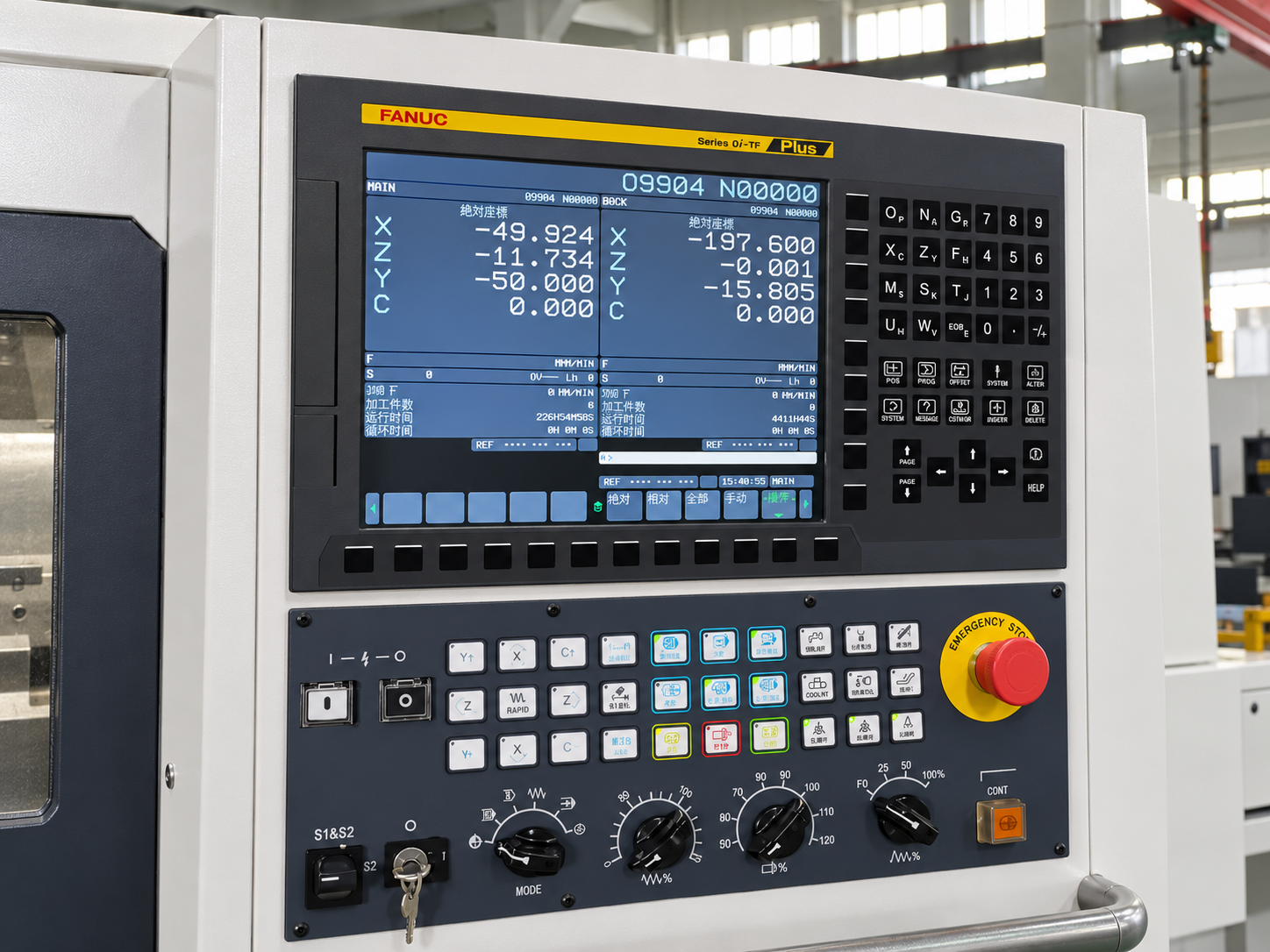
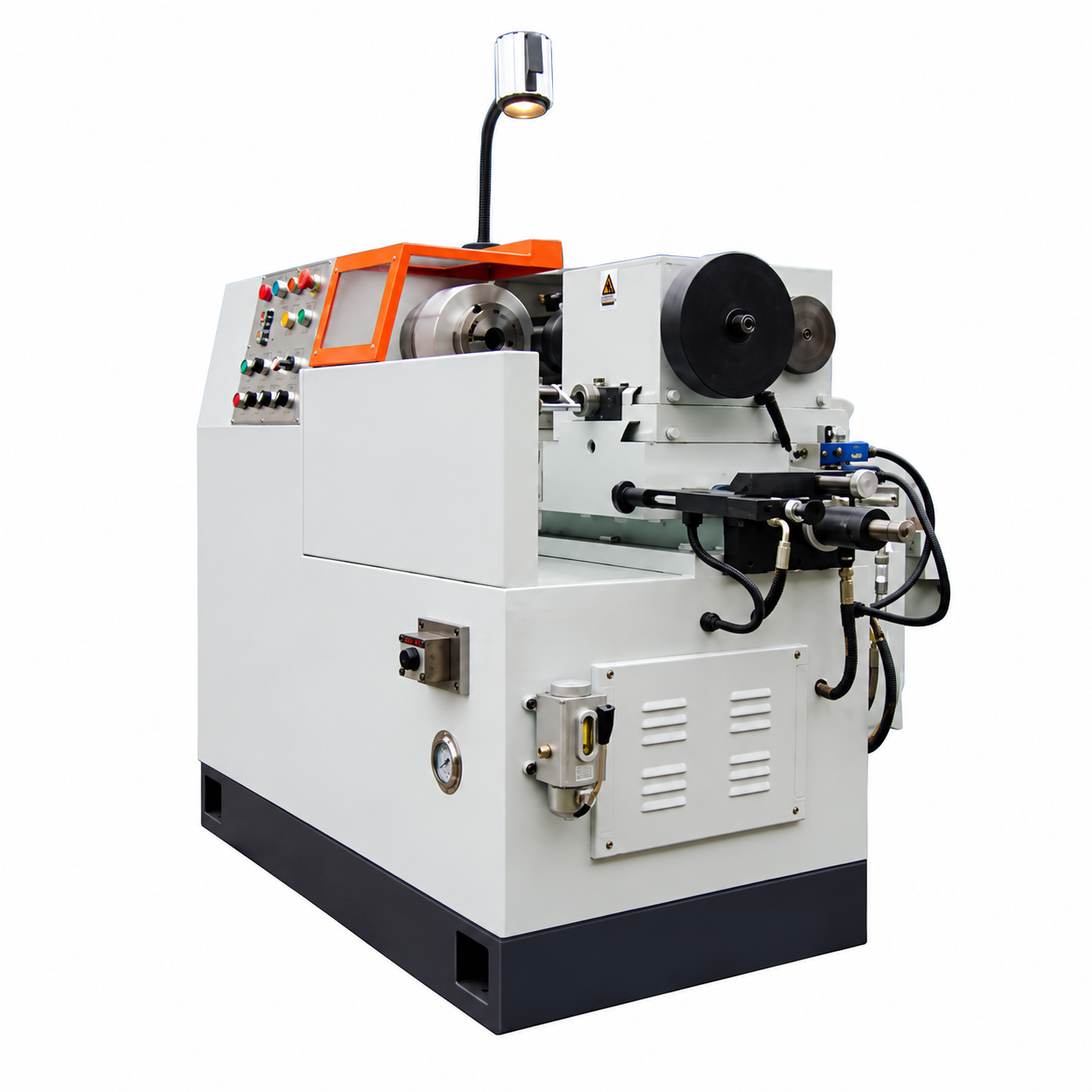
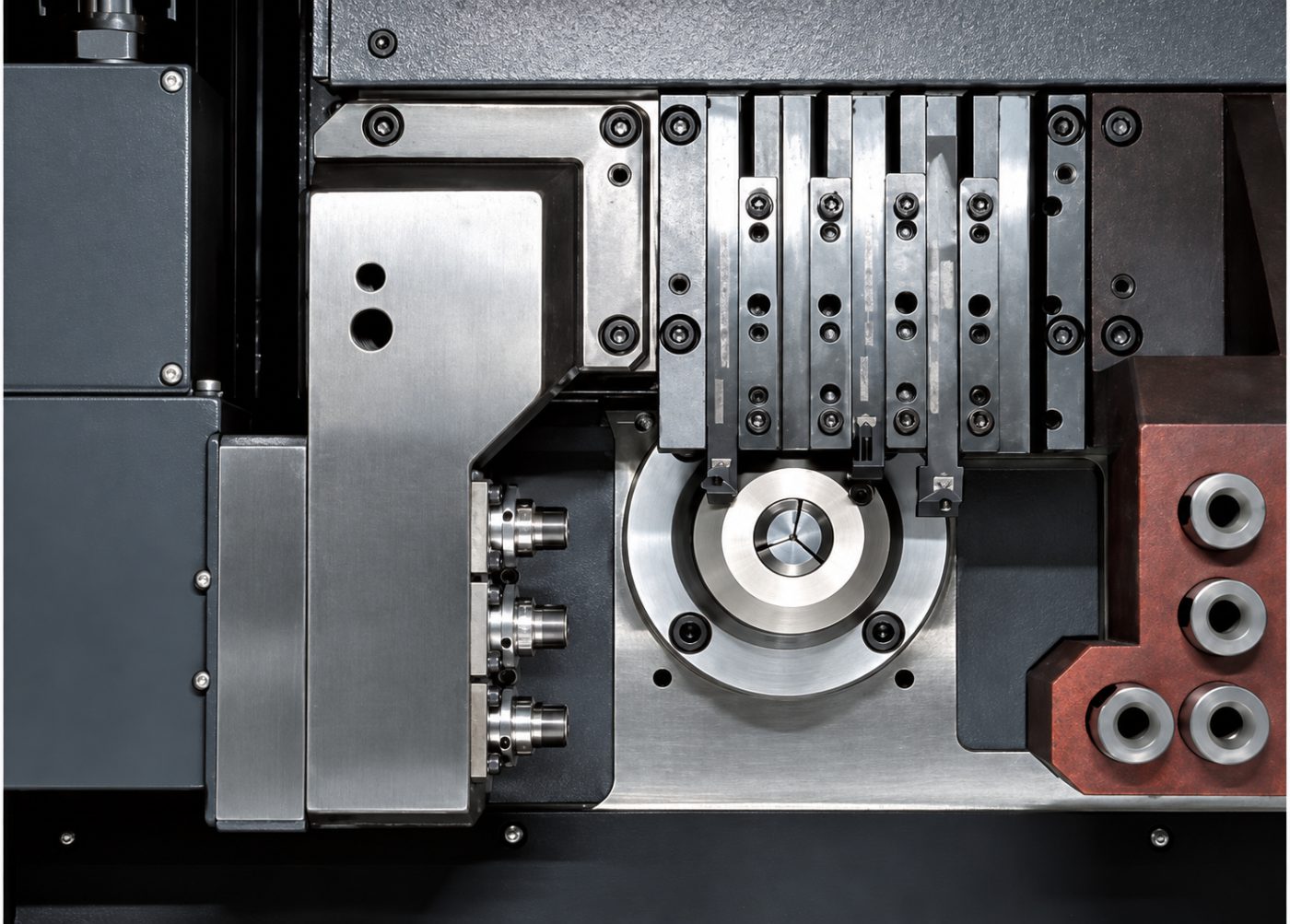
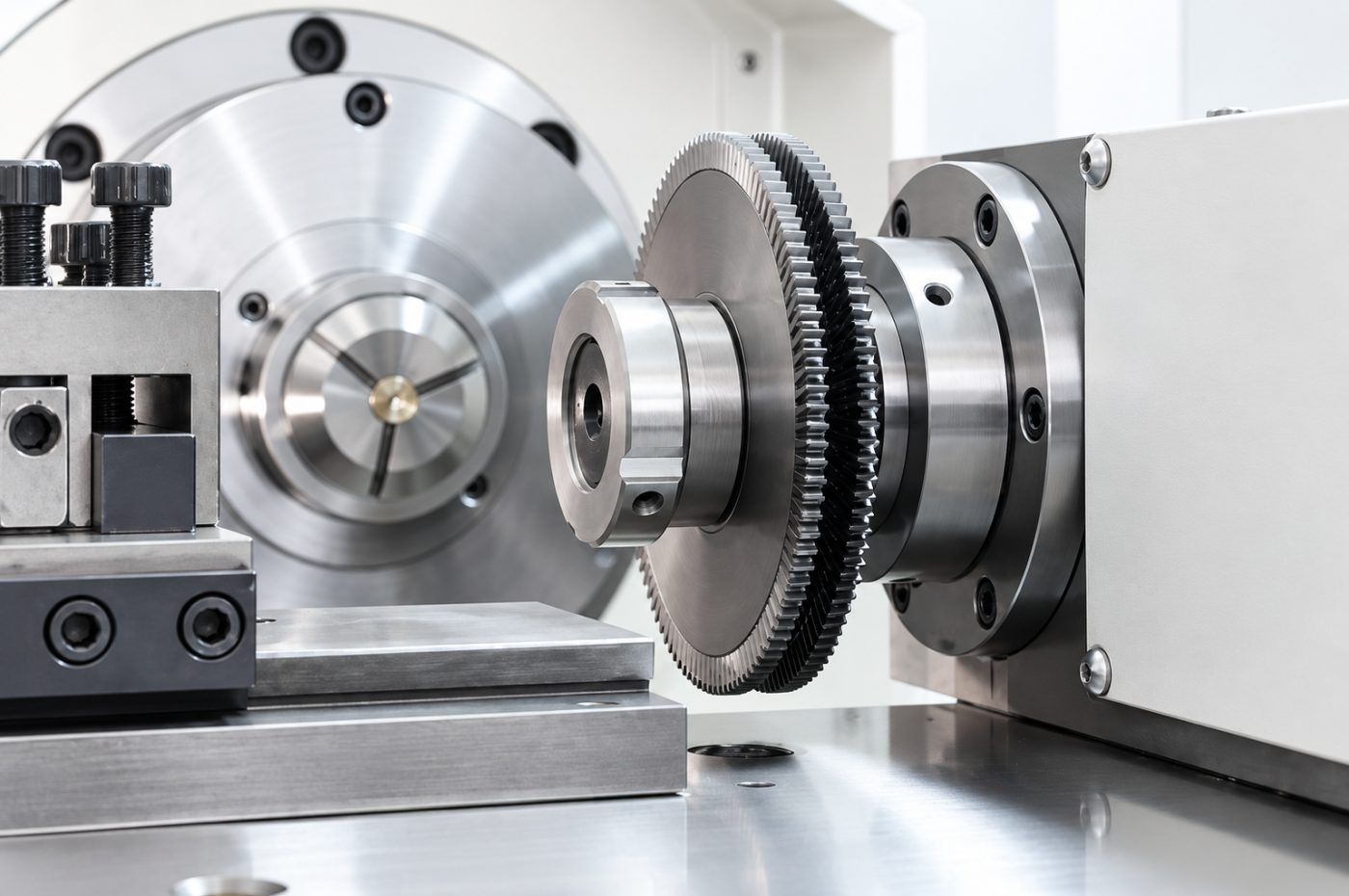
Swiss-type work zone and tooling access
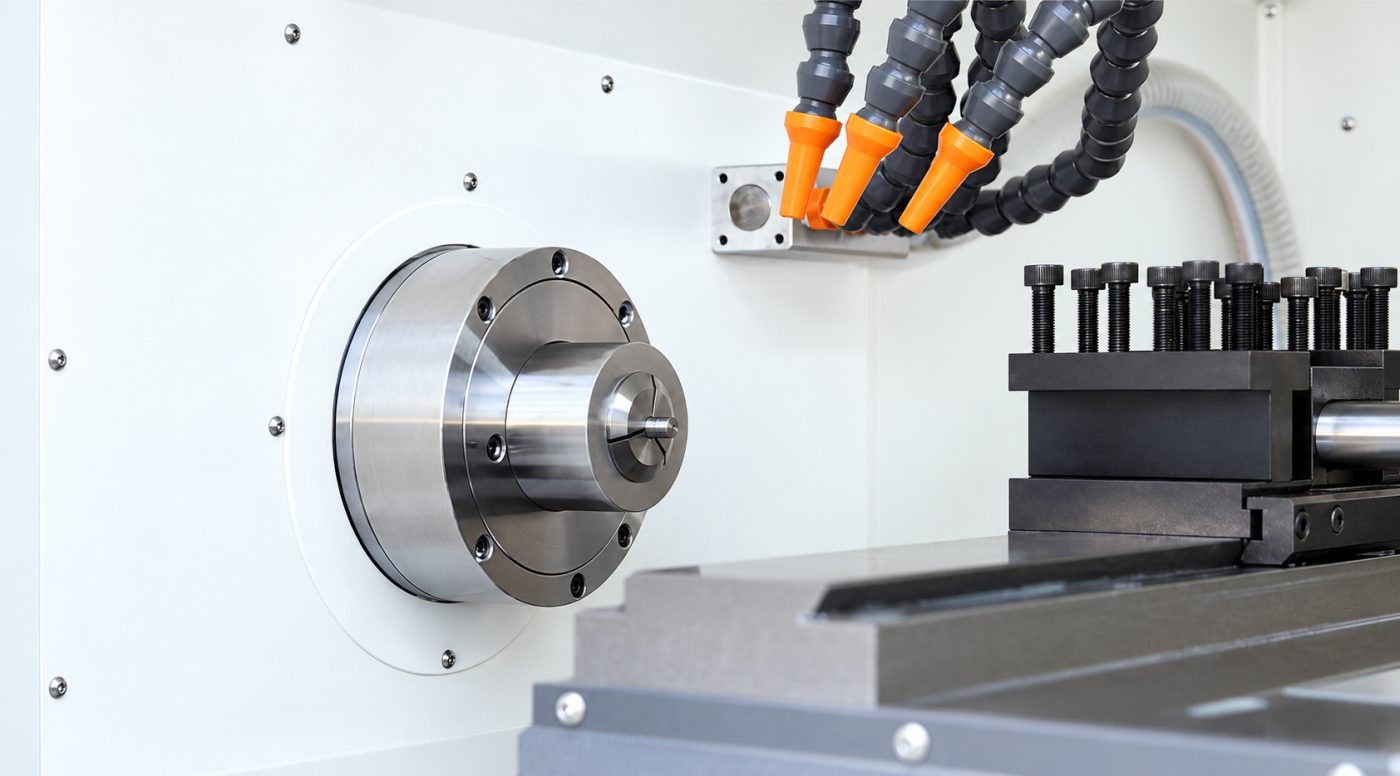
Conventional lathe spindle and tool-post area mportant overlap Diameter alone does not decide the machine. Check chuck or collet capacity, bar capacity, spindle bore, guide-bushing configuration, tool access and the actual unsupported length for the quoted model. | ||
Typical part families and crossover cases
Use the list below as a first screen. It does not replace a cycle review: two parts with the same outside diameter can require different machines because of length, features, tolerances, stock form and required output.
Part family | Swiss-type lathe often fits when… | Conventional CNC lathe often fits when… |
Pins, plungers and long shafts | The part is slender, bar-fed and needs support close to the tool; multiple features are distributed along its length. | The part is short/stiff, chucking is convenient, or diameter/length falls outside the selected Swiss machine envelope. |
Connectors and small fittings | Small bar stock, repeated precision features and cross holes or milling can be combined in a configured Swiss-type process. | The fitting is larger, short, produced in varied batches or benefits from a dedicated chuck/fixture. |
Valve stems and spools | Long, relatively small-diameter stems are made repeatedly from bar and need controlled support. | The component is larger or has shoulders/ends better handled in chucking, with secondary operations acceptable. |
Bushings, sleeves and rings | Thin-wall or small-bore geometry needs a suitable collet/process and can be made efficiently from bar. | Short, larger-diameter parts are easier to chuck, bore and face with rigid access. |
Fasteners and small turned components | High-volume small parts have repeatable bar-stock geometry and cycle-time matters. | Prototype or mixed production favors flexible setup, or parts are supplied as blanks rather than bar stock. |
Do not overlook crossover
Some parts can run successfully on either platform. For example, a short Ø10 mm pin may not need guide-bushing support, while a long Ø25 mm shaft may require a different machine or process than a nominal diameter suggests. Compare demonstrated capability, not the machine name alone.
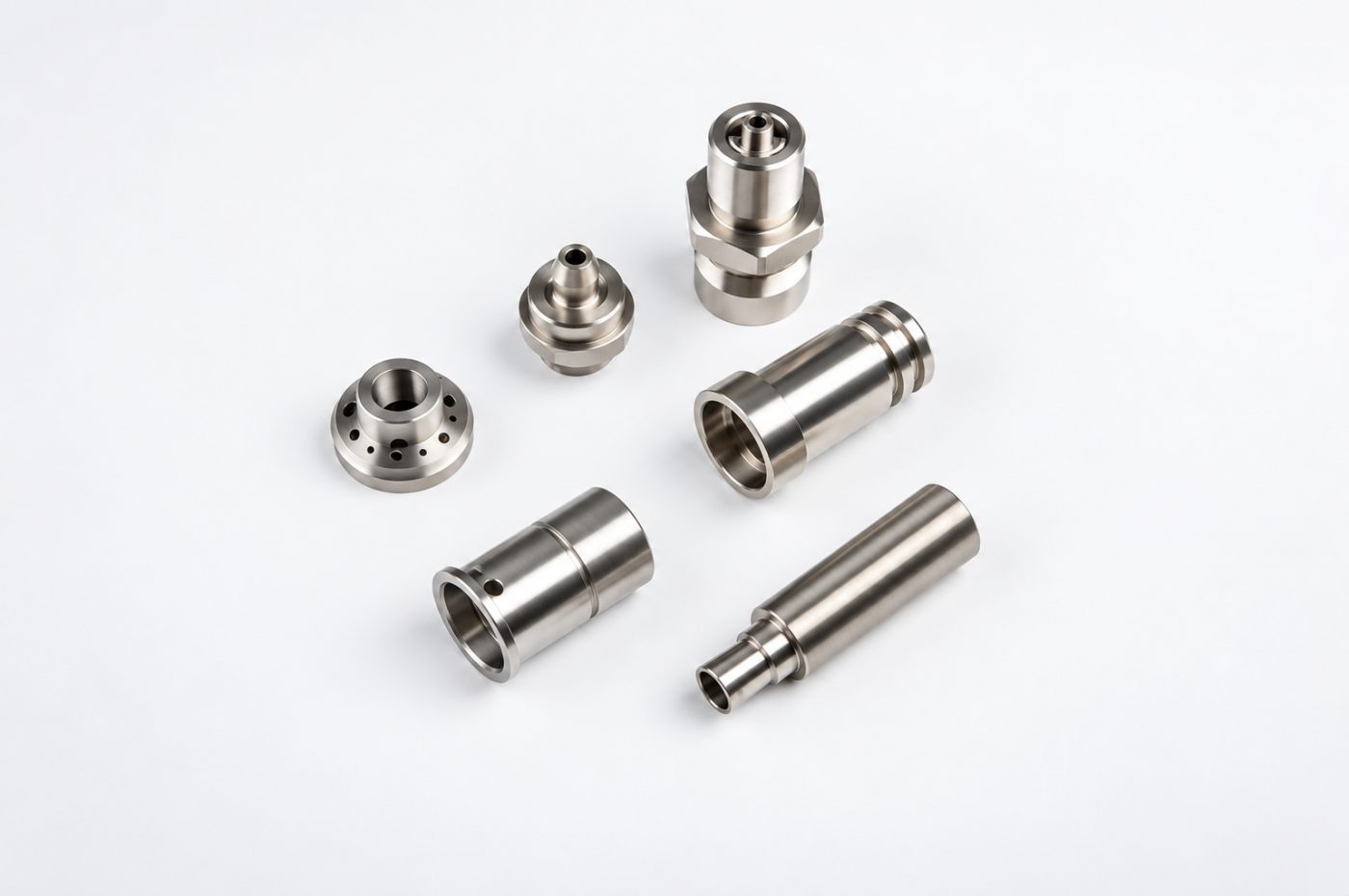
Precision-turned components: part geometry and stock form determine the suitable route.
A practical selection checklist
Question | Why it matters |
What is the stock form: bar, cut blank, forging or near-net shape? | Bar feeding can favor Swiss-type production; cut blanks may favor chuck or fixture loading. |
What is the longest unsupported length during the cut? | It indicates whether close support from a guide bushing or tailstock/steady support is useful. |
Which features must be machined on each end or on the cross surfaces? | This reveals whether live tooling, a sub-spindle or a second operation is needed. |
How many good parts are required per year, and how often does the job change? | Volume and mix determine whether setup time and automation pay back. |
What tolerance, finish and inspection plan apply? | Validate process stability and measurement capability on representative parts. |
What is the total cost per good part? | Include cycle time, operator attention, tooling, fixtures, handling, scrap and secondary operations. |
SIPENG machine examples
The supplied brochures list the SL203 Swiss-type lathe at a maximum bar capacity of Ø20 mm and the SL265 at Ø26 mm. For conventional turning, PDJ20II is listed for Ø20 mm bar stock and PDJ30II for Ø30 mm. These model figures illustrate that capacity ranges can overlap; they do not by themselves establish which process is more productive for a given part. Confirm the current specification, options and process on the written quotation.
SL265 twin-spindle Swiss-type lathe |
PDJ30II conventional CNC turning center | |
Decision rule Select the machine that supports the part reliably, completes the required operations with a proven process, and meets the production target at the lowest sustainable cost per good part. Before purchase, compare one representative drawing on both machine routes where the application overlaps. | ||
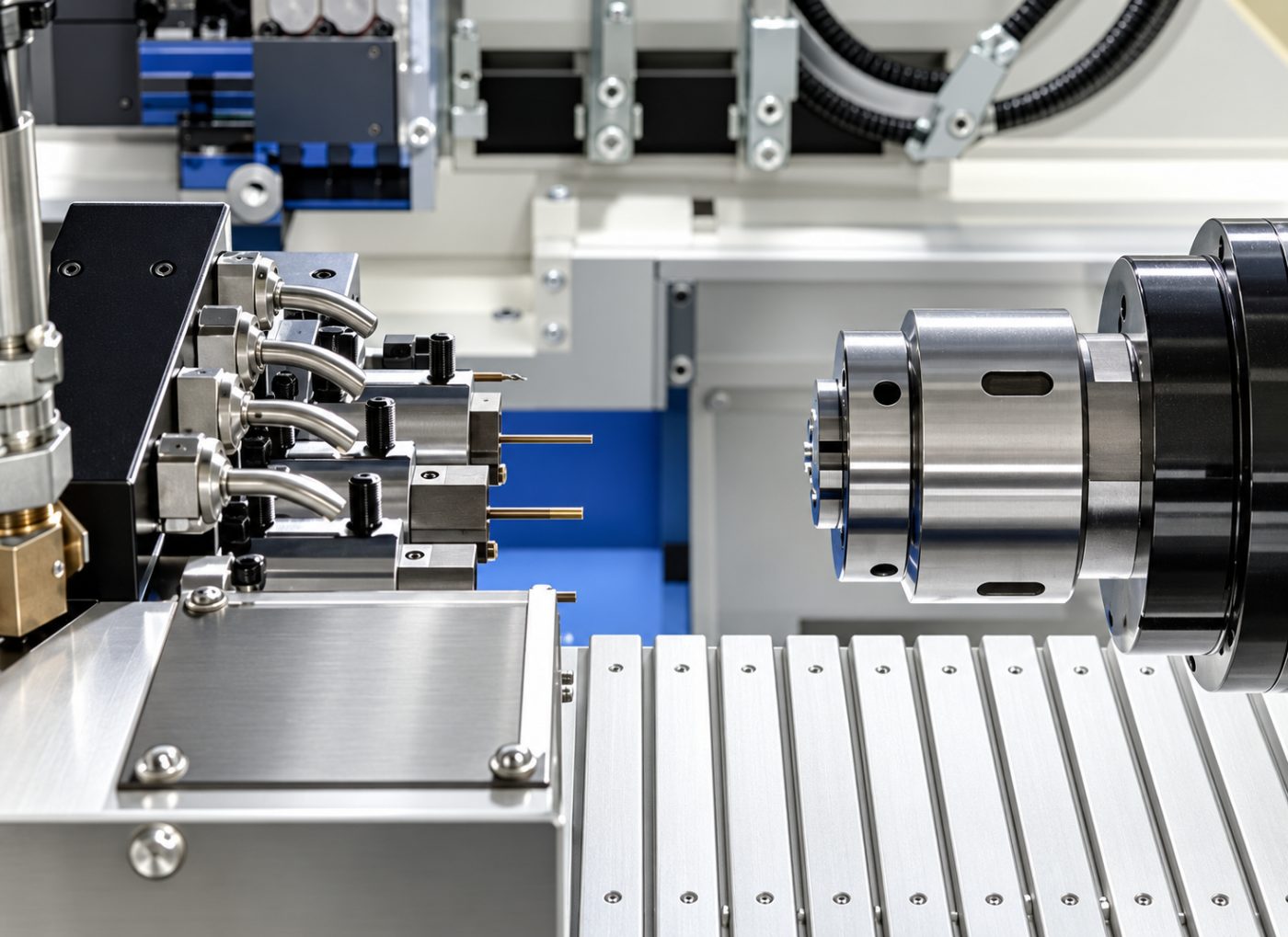
Reference basis: SIPENG CNC product brochures for SL203, SL205/SL265 and PD20II/PDJ20II/PD30II/PDJ30II. Capacities are model-specific brochure figures; verify configuration and current specifications before quotation.
Send us your drawing or sample — our engineers review material, tolerances and cycle time, and reply with a machine & process recommendation.
Discuss Your Part →