How to Choose Between Single-Spindle and Twin-Spindle Swiss-Type CNC Lathes
A practical guide to choosing between single-spindle and twin-spindle Swiss-type CNC lathes. Compare second-end machining needs, cycle time, tooling, automation, and total cost per part before selecting a configuration.
How to Choose Between Single-Spindle and Twin-Spindle Swiss-Type CNC Lathes
A part-driven comparison of workflow, second-end machining, cycle time, and total cost
The right configuration is the one that completes the required part reliably at the lowest verified cost per good part. A back spindle can remove a real secondary operation. If the part does not need back-end machining, that extra capability may add cost and setup complexity without enough production value.
What the spindle count changes
A single-spindle Swiss-type lathe uses a main spindle to feed and rotate bar stock while the tool system machines the part. When the required features can be completed from the main-spindle side, this can be a straightforward solution. Features requiring access to the opposite end may need a separate operation, part reorientation, or another suitable process.
A twin-spindle machine adds a back spindle. After the main spindle completes its operations, the back spindle can receive the part and provide access to the opposite end. This can combine front- and back-end work in one machine cycle and reduce handling, but only when the part geometry, transfer method, tooling, and CNC configuration support the process.
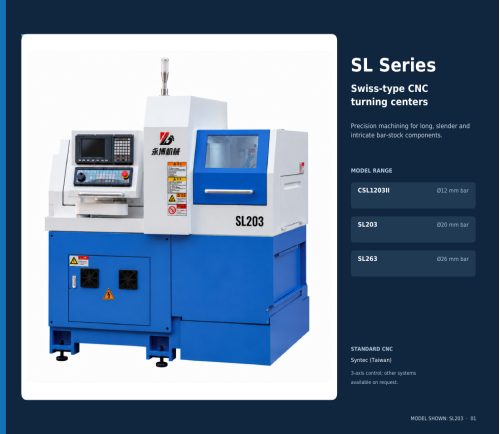
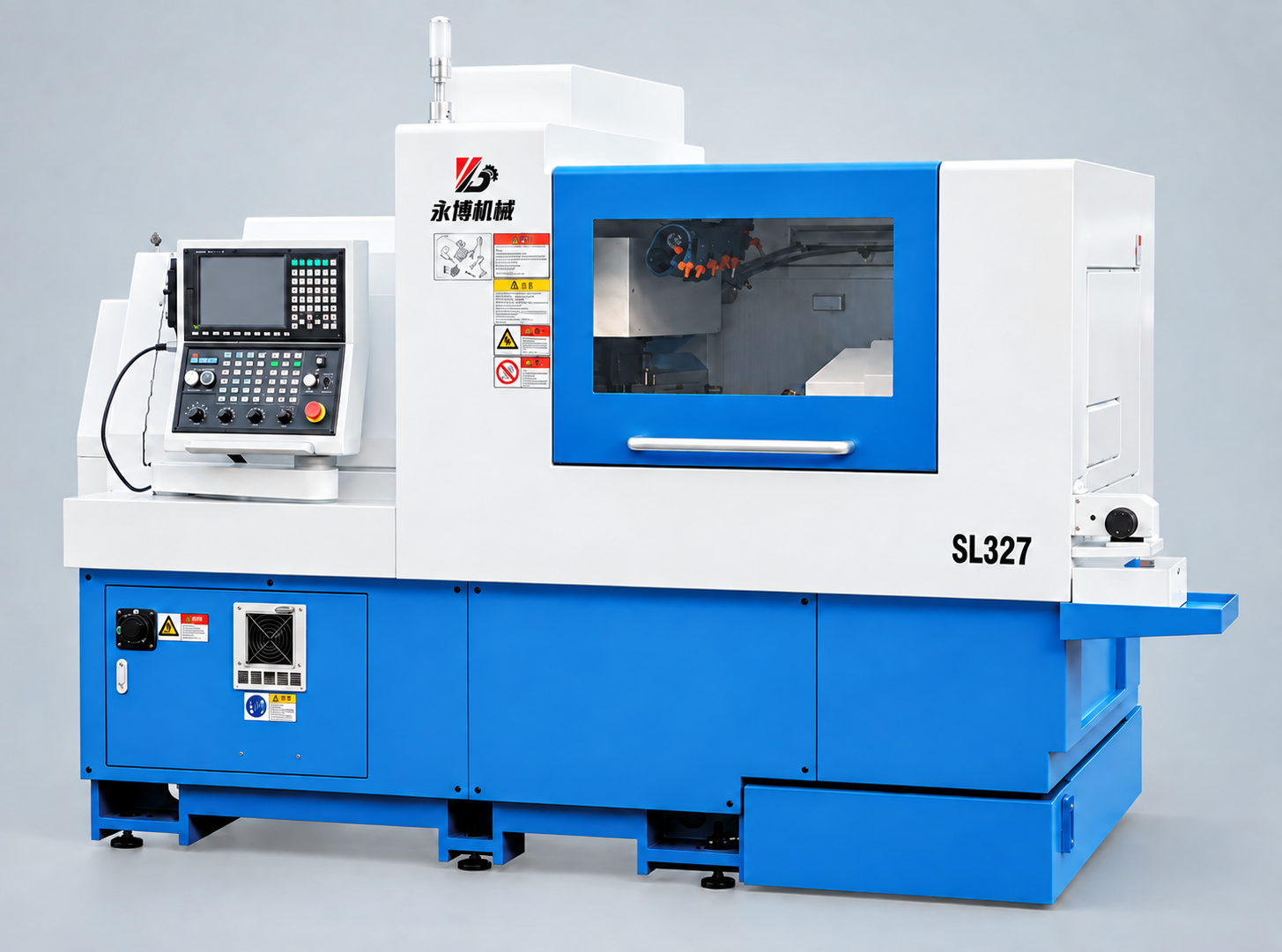
Single-spindle reference example: SL203 Swiss-type CNC turning center.
When a twin spindle earns its place
The strongest case is a part with meaningful features on both ends. Examples may include back-face turning, chamfers, grooves, cross holes, or threads that otherwise require a second setup. A twin spindle is attractive when its transfer and back-working sequence removes enough handling or cycle time to justify the added machine investment and process complexity.
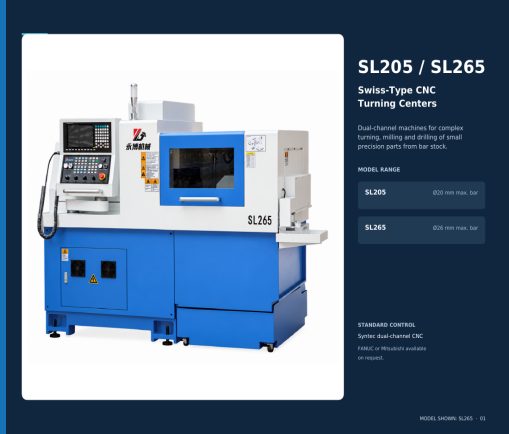
Twin-spindle reference example: SL205 / SL265 with main- and back-spindle capability.
Compare the production route, not just the machine price
Decision factor Single spindle Twin spindle
Spindle arrangement One main spindle Main spindle plus back spindle
Opposite-end features May need another setup or process, depending on the part and machine configuration Can be machined after transfer to the back spindle, if tooling and workholding allow it
Handling and work in process May involve more handling when a second operation is required Can reduce handling when both ends are completed in the same machine
Cycle-time opportunity Good when one-side machining is sufficient Potentially shorter total route; savings depend on transfer, tool access, and operation overlap
Setup and programming Typically fewer spindle-transfer steps Requires a proven transfer sequence, back-working tools, and compatible CNC/control configuration
Investment and maintenance Often a simpler configuration for comparable capacity; confirm with a quotation Higher capability can bring higher purchase, setup, and maintenance costs; compare total cost
Best fit Parts completed from the main-spindle side, or where a second operation is acceptable Parts with valuable back-end operations and enough volume to justify combining them
A practical selection checklist
Map every operation. Mark the features on the front end, back end, and any cross-drilled or milled surfaces. Confirm which features genuinely require the back spindle.
Check the part envelope. Confirm bar diameter, finished length, slenderness, material, tolerances, guide-bushing requirements, and workholding. Spindle count does not determine bar capacity.
Compare complete cycle times. Include cutting, spindle transfer, cutoff, part ejection, bar loading, tool changes, and any remaining secondary work. Do not assume a twin-spindle machine doubles output.
Check the control and tooling. Verify available channels, axes, live tooling, back-working stations, transfer sequence, and whether operations can overlap on the selected model.
Compare total cost per good part. Include machine price, tooling, fixtures, programming, setup, labor, maintenance, scrap risk, and the cost of any secondary process.
Prove the process. Run a representative part or validated simulation and confirm dimensions, cycle time, transfer reliability, chip control, and operator procedure before committing to production.
A simple decision rule
Choose a single-spindle machine when the main-spindle process can complete the part, or when the cost of a separate second operation is acceptable. Choose a twin-spindle machine when back-end machining is a regular requirement and a tested transfer sequence removes enough time, handling, or work in process to justify the added capability.
For a quote or process review, provide the part drawing, material, annual volume, required tolerances, bar size, features on both ends, and the current production route. That information makes it possible to compare configurations on process feasibility and cost per part rather than spindle count alone.
Machine examples and configuration note
The supplied SIPENG CNC brochures show the SL203 as a single-spindle reference example and the SL205 / SL265 with main- and back-spindle capability. The brochures list maximum bar capacities of Ø20 mm for the SL203 and SL205, and Ø26 mm for the SL265. These are model-specific references; confirm the current specification, options, and process suitability for the quoted configuration.
References: SIPENG CNC, SL Series Swiss-Type CNC Turning Centers (SL203); SIPENG CNC, SL205 / SL265 Swiss-Type CNC Turning Centers.
Send us your drawing or sample — our engineers review material, tolerances and cycle time, and reply with a machine & process recommendation.
Discuss Your Part →