Spring Collet, Hydraulic Chuck, or Rubber Collet?
A practical workholding guide for small gang-type CNC lathes. Compare spring collets, hydraulic chucks and rubber-flex collets by stock form, wall thickness, gripping length, cutting load and production method—not material name alone.
Spring Collet, Hydraulic Chuck, or Rubber Collet?
Choosing a workholding method for different materials on a small gang-type CNC lathe
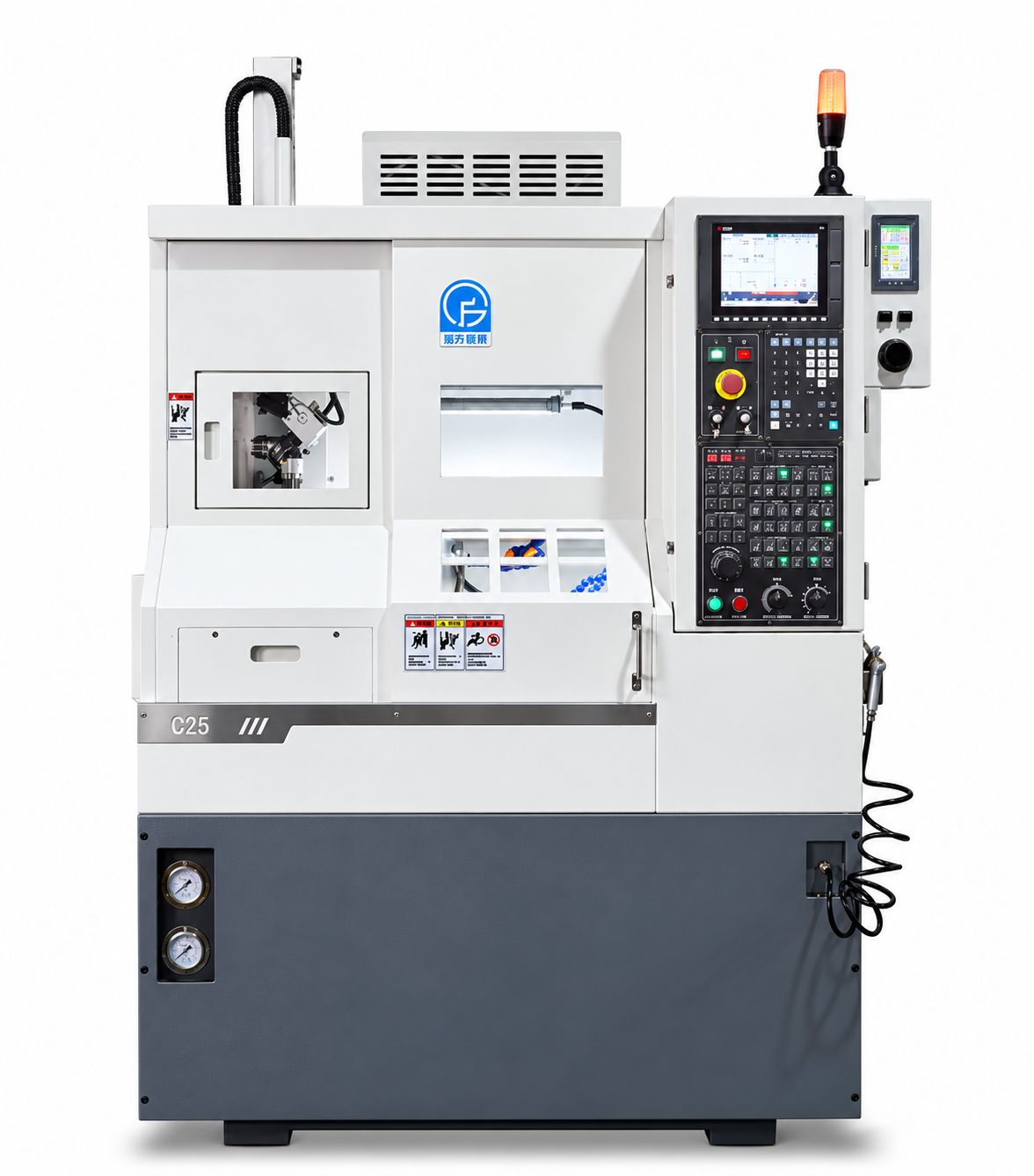
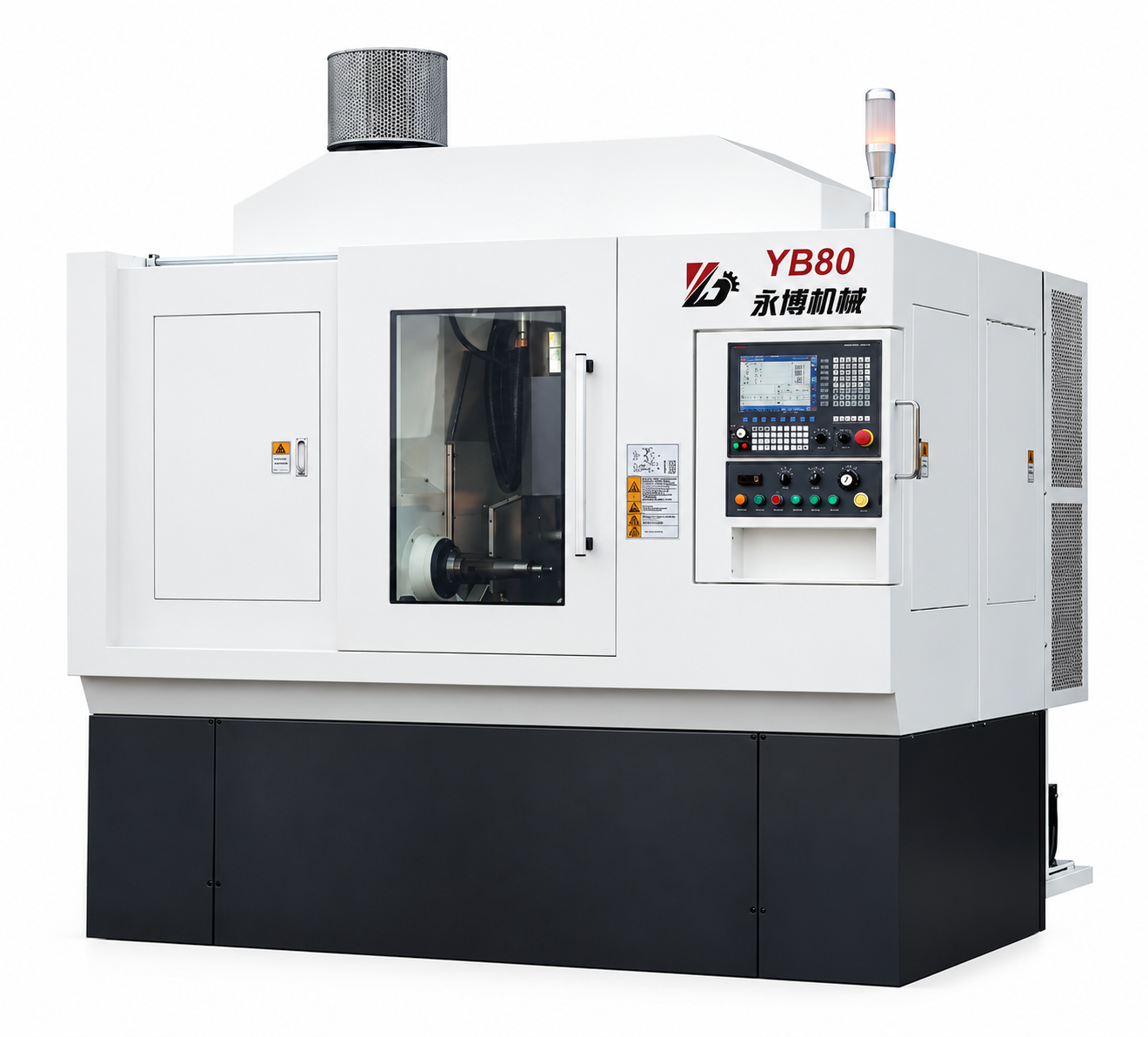
Compact C25 CNC lathe from Guangdong Yuanfang Intelligent Equipment
The short answer: choose workholding by more than alloy name. Stock shape and size, wall thickness, gripping length, surface finish, cutting load and production method all affect the decision. The same metal may suit more than one system when the collet or jaws are correctly designed and sized.
Start with the workpiece, not the chuck label
On a small gang-type lathe, the best setup is usually the one that holds the part securely with the least overhang and the least distortion, while still allowing the tools to reach the features. Check these questions first:
Question | Why it matters |
Is the stock a continuous round or hexagonal bar? | A spring collet can provide circumferential support and repeatable bar positioning, especially in bar-fed production. |
Is it a cut blank, casting or short irregular piece? | A hydraulic power chuck with suitable soft jaws can accommodate shapes and sizes that do not suit a standard bar collet. |
Is the part thin-walled, soft or cosmetically finished? | The contact area and clamping pressure may matter more than the material name. Consider rubber-flex contact, bored soft jaws or an expanding mandrel. |
Will the cut create high torque or long stickout? | The setup needs adequate grip and support. Validate clamping force, speed and part deflection under the actual cut. |
1. Spring collet: the starting point for bar work
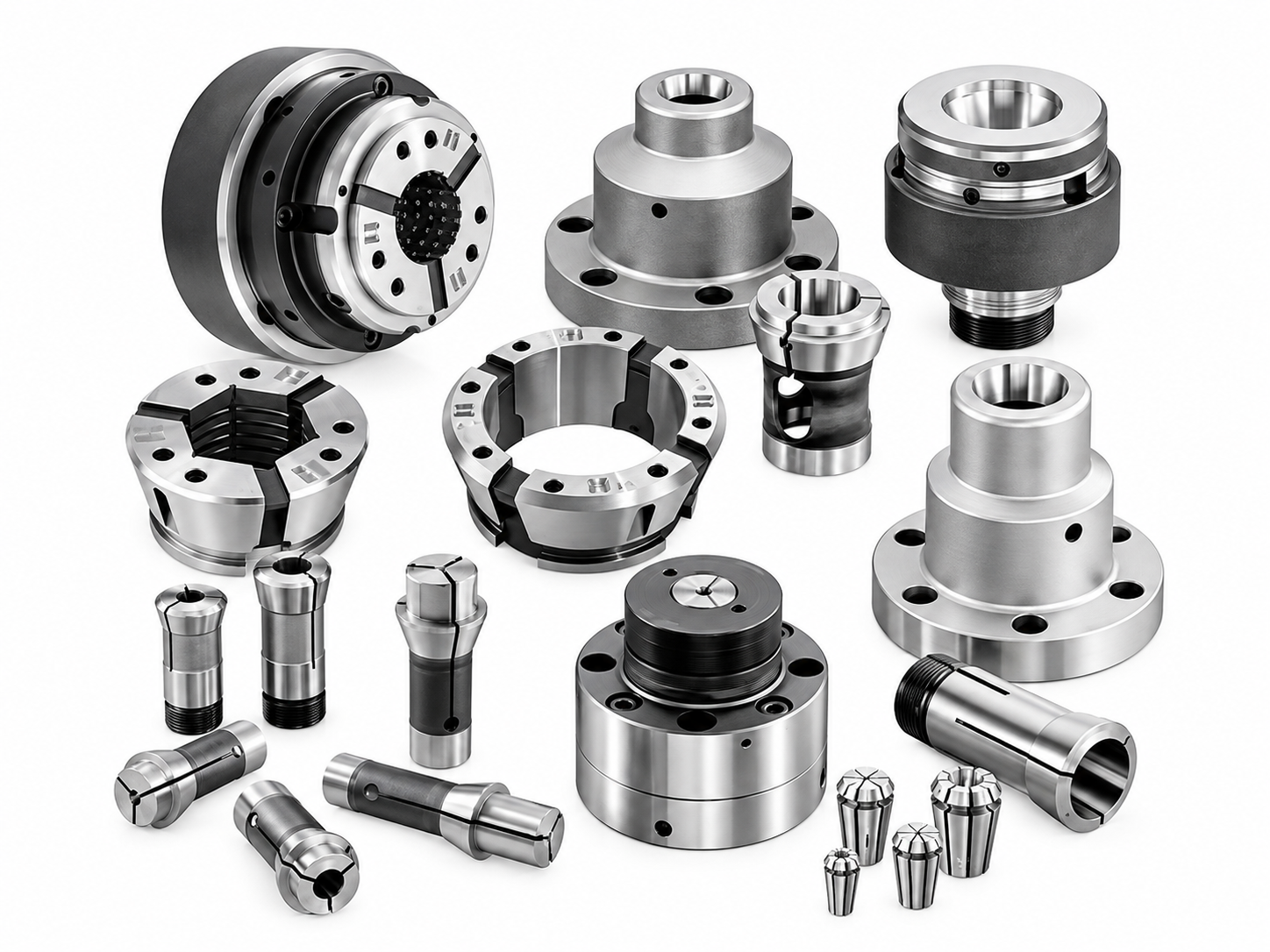
A spring collet closes around the outside of the stock. Its near-circumferential contact and compact nose are useful for small, accurately sized bar parts and short overhangs. Collet systems are commonly selected for bar work and bar-feeder applications [1, 2].
Suitable material examples
· Carbon steel, alloy steel and stainless steel bar: suitable when the bar diameter, straightness and surface condition fit the collet range and the cutting load is within the setup capacity.
· Aluminum, brass and copper bar: often a good choice for repeat production. Use a smooth or suitably relieved bore when appearance or surface marking matters.
· Engineering-plastic bar such as POM or nylon: possible with a correctly sized, smooth collet and controlled closing force. Plastics can creep or deform, so inspect the part after unclamping.
Use a spring collet when the stock is regular bar, the part diameter is within the collet’s rated gripping range, and repeatable location or bar feeding is important. Do not force an undersize or oversize bar into a collet; uneven contact can reduce grip and concentricity.
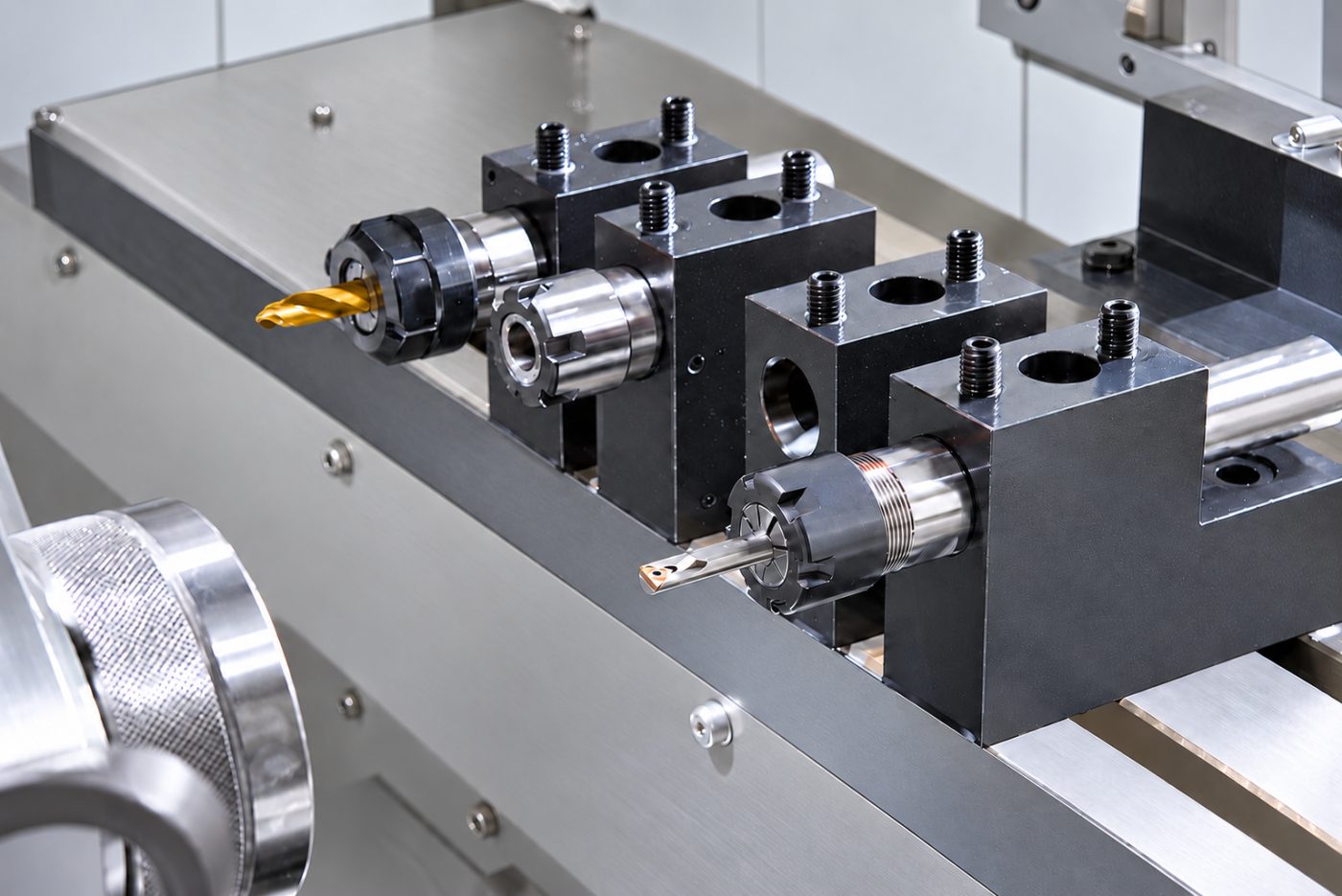
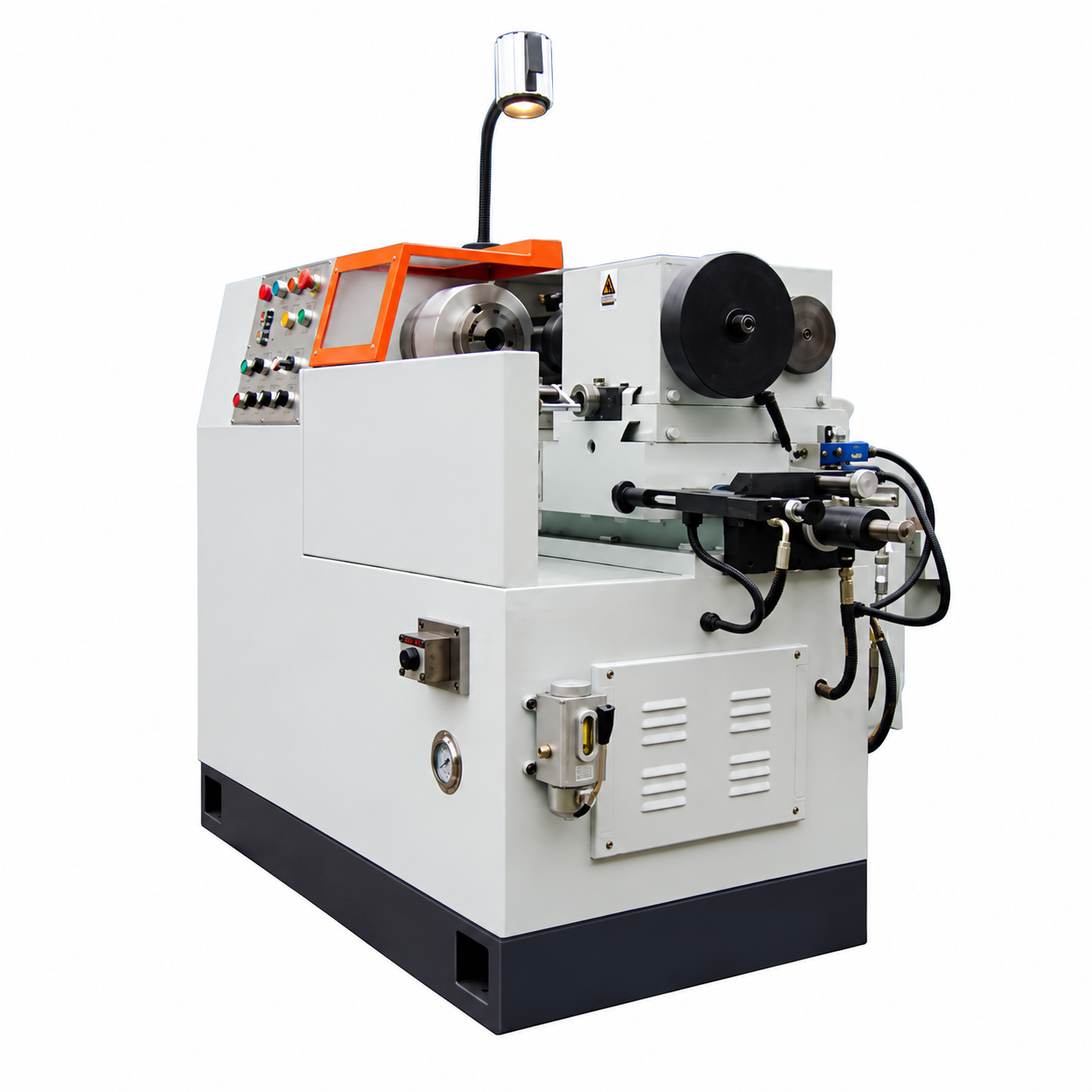
Spindle-side workholding and gang-tool arrangement on the C25 CNC lathe
2. Hydraulic chuck: for cut blanks and flexible jaw setups
A hydraulic power chuck uses an actuator to move jaws; the workpiece-contacting element is still the jaw set. It is a practical choice when the stock is supplied as cut pieces, has a larger or changing outside diameter, needs a custom jaw profile, or cannot pass through the spindle as bar stock. Power chucks offer substantial clamping force and jaw travel, while the actual grip depends on the chuck, jaw geometry, speed and operating pressure [3].
Material examples: steel and stainless-steel blanks, aluminum billets, brass parts, castings and other short workpieces can all be suitable. For soft aluminum, copper alloys, thin-wall tubing or finished surfaces, use properly bored soft jaws or other broad-contact jaws and reduce the pressure to the lowest level that safely prevents movement.
A hydraulic chuck is not automatically the “stronger and safer” choice. Excessive pressure can distort a thin ring or tube, mark a soft surface, or affect the measured size after release. Confirm the chuck’s force and speed limits and test the finished part after unclamping.
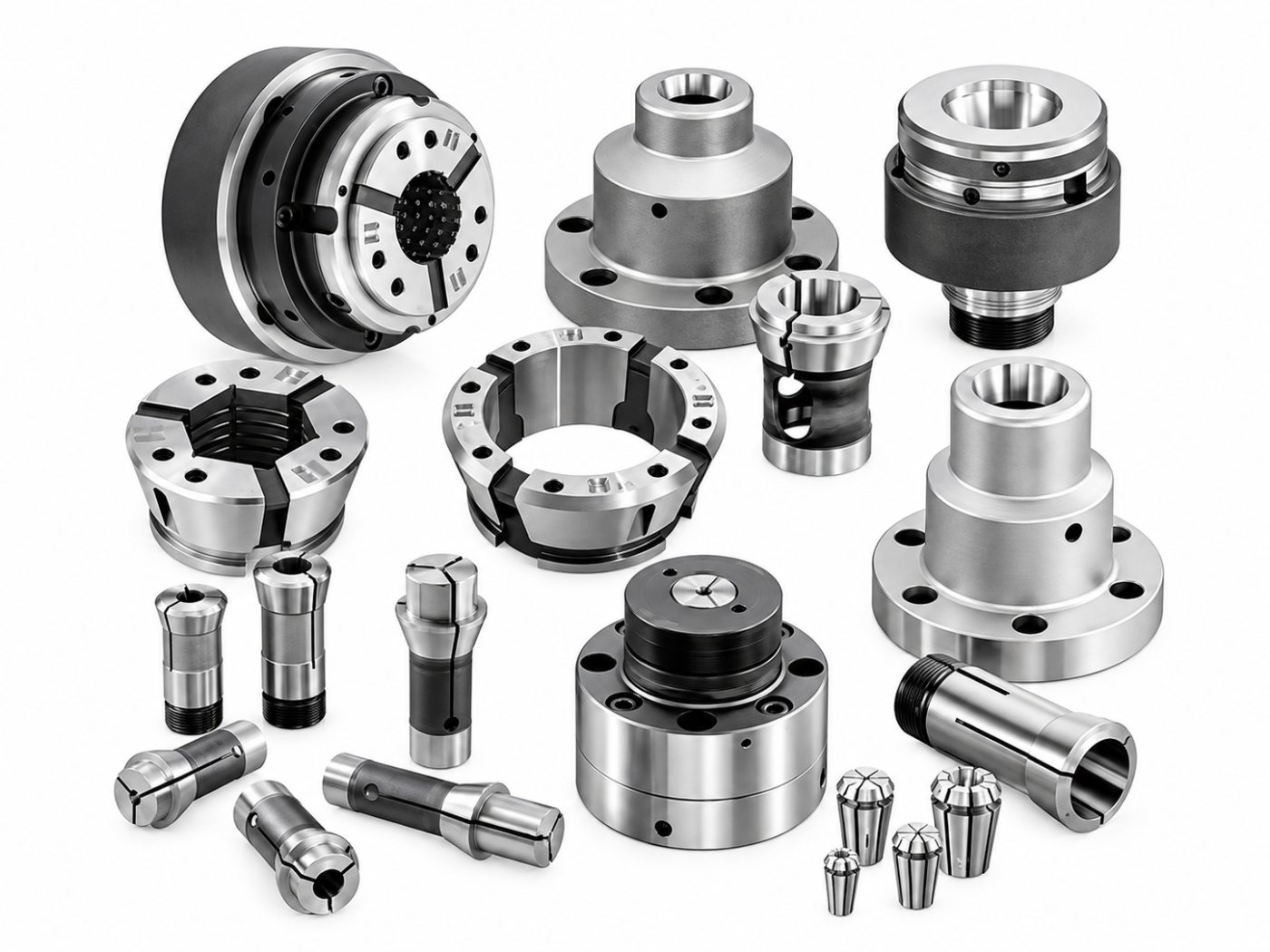
3. Rubber collet: when compliant contact protects the part
In this context, “rubber collet” usually means a purpose-built flexible collet with an elastomeric contact layer or bonded rubber segments, rather than a chuck made entirely from rubber. Its compliant contact can spread the load over a larger area and reduce localized marking on deformation-sensitive or surface-sensitive parts. Rubber-flex workholding suppliers describe applications that include thin-wall and easily marked turned parts [4].
Potential candidates include thin-wall aluminum or copper-alloy sleeves, polished or coated parts, and some precision steel components where jaw marks are unacceptable. It may also be considered for engineering plastics, but only if the collet is designed for that material and the cut is light enough to avoid slip or distortion.
Before choosing one, confirm whether it grips the outside diameter or expands inside a bore; these are different workholding arrangements. Check the elastomer’s compatibility with coolant, cutting oil, temperature and rotational speed. A compliant collet does not eliminate deformation, and it is not a universal solution for every soft material.
Quick selection guide
Workpiece / production condition | Best first option to evaluate | Key check |
Round or hex bar; repeated small parts; bar feeder | Spring collet | Diameter range, bar straightness, gripping length and runout |
Short cut blanks, castings or non-standard outside profiles | Hydraulic chuck with matched soft jaws | Jaw contact, clamping pressure, balance and tool clearance |
Thin-wall or easily marked sleeve / finished surface | Rubber-flex collet, bored soft jaws or expanding mandrel | Clamp direction, wall deflection, surface marks and elastomer compatibility |
Hard-to-machine steel or heavier cut | Collet or chuck selected for the machine and actual cutting load | Grip torque, stickout, speed rating and safe clamping force |
Soft or flexible plastic | Smooth collet or compliant/custom fixture | Creep, heat, coolant compatibility and size after release |
A practical setup check before production
· Confirm the exact machine interface, collet or chuck model, rated diameter range and maximum speed.
· Use the shortest practical stickout and enough gripping length for the cutting forces.
· Set pressure or draw force only high enough to prevent movement; follow the machine and chuck manufacturer limits.
· Run a test part. Check runout, pull-out or slip, surface marking, and dimensional change after unclamping.
· Recheck the setup after a tool change, material-lot change, or change in bar diameter or wall thickness.
Bottom line: choose a spring collet for regular bar work, a hydraulic chuck for cut blanks and jaw flexibility, and a rubber-flex collet when compliant, distributed contact is needed. Final selection must be proved on the actual part and machine.
References
[1] Hardinge, 16C Dead-Length Through-Hole Assembly (bar work and long workpieces). https://shop.hardinge.com/All-Products/Workholding/Collets/Lathe-Collets/16C-Dead-Length-Thru-Hole-Assembly-without-Inner-Collet/p/11710104000000/
[2] Royal Products, CNC Collet Chucks (bar-feeder and small-diameter workholding). https://royalproducts.com/product-line/royal-cnc-collet-chucks/
[3] SCHUNK, ROTA NCR-A Sealed Six-Jaw Power Lathe Chuck (deformation-sensitive thin-wall clamping). https://schunk.com/us/en/workpiece-clamping-technology/lathe-chucks/power-lathe-chucks-without-through-hole/rota-ncr-a/c/PGR_4122
[4] KORRETTO, Rubber-Flex Collet Chuck (turning workholding overview). https://www.korretto.com/rubber-flex-collet-chuck-multi-spindle.html
Send us your drawing or sample — our engineers review material, tolerances and cycle time, and reply with a machine & process recommendation.
Discuss Your Part →